

Choosing between a hand mixer vs stand mixer can feel surprisingly tricky, especially with so many options flooding the market today. According to a 2023 report by Statista, the global kitchen appliance market surpassed $240 billion, with electric mixers ranking among the top-selling tools for home bakers. A separate survey by the American Baking Association found that over 62% of home bakers own at least one type of electric mixer. Understanding the real differences between these two tools helps you spend smarter and bake better. This guide breaks down everything you need to know before making your decision.
What Is a Hand Mixer and How Does It Work?
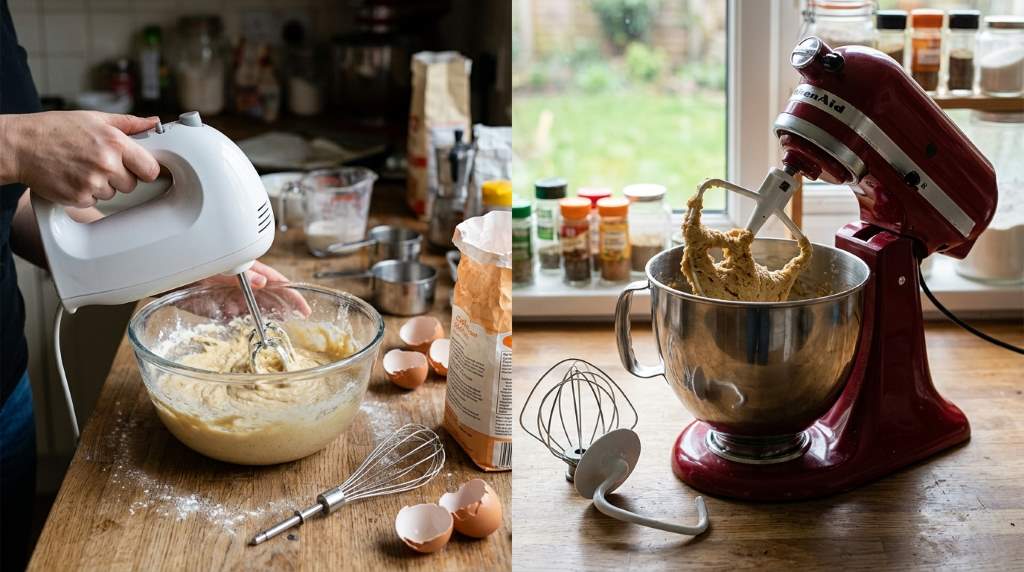
A hand mixer is a lightweight, handheld electric device with two removable beater attachments. You hold it directly over your bowl and move it around to mix ingredients evenly. Most hand mixers weigh between 2 and 4 pounds, making them easy to store in a drawer or cabinet. They typically come with multiple speed settings and a few basic attachments like beaters, dough hooks, and whisks.
Key Advantages of a Hand Mixer
Hand mixers offer several practical benefits that make them a favorite among casual bakers.
- Affordable price: Most quality hand mixers cost between $25 and $80.
- Easy storage: Their compact size fits in small kitchens effortlessly.
- Lightweight design: You can use them with any bowl, pot, or container.
- Quick cleanup: The detachable beaters rinse clean in seconds.
- Great for small batches: They handle whipped cream, frosting, and cake batter with ease.
Because of their low cost and convenience, hand mixers are the go-to choice for beginners and occasional bakers who do not need heavy-duty performance.
Limitations of a Hand Mixer
Despite their advantages, hand mixers do have real drawbacks worth considering. They require you to hold the device throughout the entire mixing process, which tires your arm during long sessions. Most hand mixers also lack the motor power needed for stiff bread doughs or large batch cookie recipes. Additionally, splatter can be a problem at higher speeds if you are not careful. They are simply not built for heavy, demanding baking tasks.
What Is a Stand Mixer and How Does It Work?
A stand mixer is a freestanding appliance with a powerful motor mounted on a stable base. It uses a rotating bowl and a planetary mixing action to ensure every part of the mixture gets contacted evenly. Stand mixers typically weigh between 20 and 30 pounds, so they usually live permanently on your countertop. They come with a range of attachments, including a flat beater, dough hook, and wire whip, right out of the box.
Key Advantages of a Stand Mixer
Stand mixers are the powerhouse choice for serious and frequent bakers.
- Hands-free operation: You can walk away and multitask while it mixes.
- Superior motor power: They handle heavy doughs, thick batters, and large volumes effortlessly.
- Consistent results: Planetary mixing ensures thorough, even blending every time.
- Versatile attachments: Many models support pasta makers, meat grinders, and food processors.
- Built to last: High-quality stand mixers like the KitchenAid Artisan can last 10 to 15 years with proper care.
Furthermore, stand mixers excel in professional and semi-professional settings where baking happens frequently and in large quantities.
Limitations of a Stand Mixer
Stand mixers come with a few notable disadvantages that matter to some buyers. Their price range typically falls between $300 and $700 for quality models, making them a significant investment. They also occupy a large portion of counter space, which can be a problem in smaller kitchens. Moving them for cleaning or storage requires effort due to their heavy weight. Finally, for simple tasks like whipping one cup of cream, they can feel like overkill.
Hand Mixer vs Stand Mixer: A Direct Feature Comparison
Understanding the direct comparison helps you match the right tool to your specific needs.
| Feature | Hand Mixer | Stand Mixer |
|---|---|---|
| Average Price | $25 to $80 | $300 to $700 |
| Weight | 2 to 4 lbs | 20 to 30 lbs |
| Motor Power | 150 to 300 watts | 250 to 600 watts |
| Best For | Light tasks, small batches | Heavy doughs, large batches |
| Hands-Free Use | No | Yes |
| Storage | Compact drawer | Countertop space needed |
| Attachments | Limited | Extensive |
This side-by-side view makes it easier to see which tool fits your lifestyle and baking habits. Neither mixer is universally better; each one simply serves a different purpose. The right choice depends entirely on how often you bake and what you typically make.
Which One Should You Choose?
The answer to the hand mixer vs stand mixer debate depends on three key factors: your budget, your baking frequency, and the complexity of your recipes.
Choose a hand mixer if you:
- Bake occasionally, maybe once or twice a month
- Prefer a budget-friendly option under $100
- Have a small kitchen with limited storage space
- Mostly make simple recipes like cakes, cookies, and whipped cream
- Want something portable that works with multiple bowls
Choose a stand mixer if you:
- Bake several times per week or run a home bakery
- Are comfortable investing $300 or more in a durable appliance
- Regularly make bread dough, pasta, or large batches of batter
- Want hands-free convenience and consistent professional results
- Plan to expand your kitchen capabilities with attachments over time
Ultimately, many serious bakers eventually own both. They use a hand mixer for quick, small jobs and rely on the stand mixer for ambitious weekend projects. Starting with a hand mixer and upgrading later is a perfectly smart strategy for new bakers.
Best Models Worth Considering in 2026
Several reliable models stand out in both categories right now.
For hand mixers, the KitchenAid 5-Speed Ultra Power Hand Mixer and the Cuisinart HM-90S Power Advantage Plus consistently earn top reviews for their power, durability, and ease of use. Both offer solid performance for everyday baking tasks at a reasonable price point.
For stand mixers, the KitchenAid Artisan Series 5-Quart Stand Mixer remains the gold standard for home bakers. The Bosch Universal Plus is another excellent option for bread bakers who need serious dough capacity. Both deliver long-term value and come with strong warranty support.
Tips for Getting the Most Out of Either Mixer
Regardless of which mixer you choose, a few smart habits will help you get better results every time.
- Always start mixing at a low speed to prevent flour clouds and splatter.
- Use room-temperature butter and eggs for smoother, faster mixing.
- Do not overload the bowl; fill it no more than two-thirds full for best results.
- Clean attachments immediately after use to prevent residue buildup.
- For stand mixers, regularly check the bowl-to-beater clearance for even mixing.
Following these tips extends the life of your mixer and improves the quality of your baked goods noticeably.
Conclusion
The hand mixer vs stand mixer decision really comes down to your personal baking lifestyle and goals. If you bake light recipes occasionally and value convenience, a hand mixer is your best starting point. However, if baking is a regular passion and you crave efficiency, power, and versatility, a stand mixer is absolutely worth the investment. Both tools bring real value to the kitchen in their own right. Take stock of what you bake most, how often you bake it, and how much counter space you have, then choose accordingly. Ready to upgrade your baking game? Pick the mixer that matches your ambitions and start creating something delicious today.
Frequently Asked Questions
Can a hand mixer replace a stand mixer for bread dough?
A hand mixer can handle soft doughs in small amounts, but it lacks the motor strength and capacity needed for most bread recipes.
Is a stand mixer worth the high price?
Yes, for frequent bakers, a stand mixer pays for itself over time through durability, versatility, and hands-free convenience.
How long does a quality hand mixer last?
A well-maintained quality hand mixer typically lasts between 5 and 10 years with regular use.
Can I use a stand mixer for small batches?
Yes, but small batches may not reach the beater properly; a hand mixer is generally more efficient for single-serving or small recipes.
Which mixer is easier to clean?
Hand mixers are easier to clean since their detachable beaters rinse quickly, while stand mixer bowls and attachments require more thorough washing.