

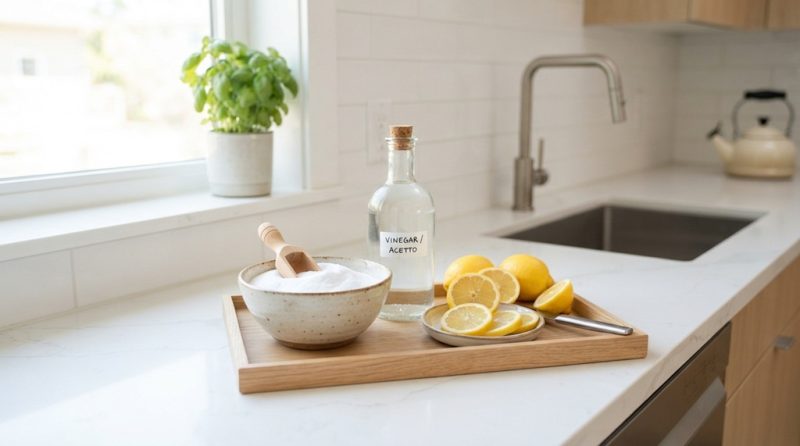
Kitchen odors usually come from four sources: your drain, your fridge, your trash can, and porous surfaces like wood cutting boards and sponges. These spots trap grease and bacteria over time. To remove the smell for good, you need to treat each source directly with natural absorbents and disinfectants. Masking the smell with a spray won’t fix it.
Most guides tell you to sprinkle baking soda in the fridge and stop there. That works for a little while. But if the smell comes back within a week, something else is still producing it. This guide covers quick fixes and root-cause fixes, so the odor doesn’t return.
We’ll walk through the best natural items for each type of smell, how to use them, and a few overlooked spots that are often the real problem.
Why Kitchen Odors Keep Coming Back

Odors return because most cleaning only treats the surface. The bacteria or food causing the smell often hides somewhere out of sight. Wiping a counter doesn’t reach what’s inside a sponge, behind a drain trap, or soaked into a wooden cutting board.
Three things usually cause a smell to keep coming back:
- Grease residue near the stove. It turns rancid over time and releases odor when the kitchen warms up.
- Biofilm inside the sink drain. This slimy bacterial layer often survives sprays and even boiling water.
- Porous materials that absorb smells. Wood, plastic, and rubber gaskets hold onto odors long after the food is gone.
If you’ve cleaned every visible surface and the smell is still there, check these three hidden spots first.
Neutralizing Fridge and Freezer Odors Naturally
An open container of baking soda is the fastest way to neutralize everyday fridge odors. For stronger or lingering smells, activated charcoal and coffee grounds work faster. They trap odor molecules instead of just absorbing moisture.
Baking Soda for Ongoing Odor Control
Place an open box or shallow bowl of baking soda on a middle shelf. It pulls odor compounds out of the air through a process called adsorption. Replace it every 30 days. Old baking soda stops working once it’s absorbed all it can hold, and people often leave the same box in for months without realizing it’s no longer doing anything.
Activated Charcoal for Strong, Lingering Smells
Activated charcoal has more surface area than baking soda. That makes it better for tough smells like fish, onions, or spoiled leftovers. Small mesh bags of charcoal can sit in the fridge for up to two months. Just set them in direct sunlight for a few hours afterward to “recharge” them.
Deep-Cleaning the Root Source of Persistent Odors
When stubborn kitchen odors fail to dissipate within 24 to 48 hours, an unseen, decaying culprit is usually at play deep within your appliances. Instead of relying on temporary air fresheners, inspect high-friction microbial zones like the refrigerator drip tray, rubber door gaskets, and back shelf corners, wiping them thoroughly with a warm water and white vinegar solution—whose natural acidity actively neutralizes odor-causing bacteria at the molecular level rather than merely masking the scent. Ultimately, keeping your kitchen impeccably fresh and bacteria-free goes hand in hand with maintaining an efficient, well-structured environment, so as you elevate your workspace, layout a kitchen triangle for easier meal prep to streamline both cooking and cleanup effortlessly.
Eliminating Drain and Garbage Disposal Smells
Drain odors come from grease, food particles, and biofilm coating the inside of the pipe. Rinsing the drain won’t remove this buildup. You need to break it down. Vinegar and baking soda create a fizzing reaction that helps lift residue off the pipe walls.
Weekly drain treatment:
- Pour 1/2 cup of baking soda into the drain
- Add 1 cup of white vinegar
- Let it fizz for 10–15 minutes
- Flush with a full kettle of boiling water
For garbage disposals, freeze white vinegar in an ice cube tray. Run a few cubes through the disposal each week. The ice scrapes food particles off the blades while the vinegar disinfects them. Liquid vinegar alone often just washes through without touching the blades.
Removing Trash Can and Compost Bin Odors
Trash can smells almost always come from liquid pooling at the bottom of the bin, not from the bag itself. That means the real fix is drying out and disinfecting the bin, not just swapping the bag more often. A damp bin bottom can grow odor-causing bacteria within a day or two, even with a fresh liner.
- Line the bottom with baking soda under the bag to absorb leaks before they sit and ferment.
- Wash the bin monthly with hot water and vinegar. Let it air-dry fully in the sun before adding a new liner. Sunlight helps disinfect through natural UV exposure.
- For compost bins, add a handful of used coffee grounds on top of scraps between bag changes. The grounds absorb the sharp, ammonia-like smell that builds up as food decomposes.
Getting Rid of Cooking Smells That Linger in the Air
Cooking smells like fried fish or curry stick around because oil particles carrying the odor settle onto soft surfaces like curtains and upholstery. This means ventilation alone won’t fully clear the air. You need airflow plus something that actively absorbs the odor.
Simmering a Natural Deodorizer
Simmer a small pot of water with citrus peels, a few cloves, and a cinnamon stick for 15–20 minutes. Run your exhaust fan at the same time. This isn’t just about adding a nicer smell on top. The steam carries citrus oils through the air, and these oils naturally neutralize sulfur-based odors from fish or onions.
Bowls of Vinegar or Coffee Grounds
After cooking something strong-smelling, place small bowls of white vinegar around the kitchen, not just near the stove. The vinegar absorbs odor molecules from the air over a few hours. Coffee grounds work in a similar way and leave a milder scent behind, which makes them a better choice for smaller kitchens.
The Overlooked Odor Source: Sponges, Dish Towels, and Cutting Boards
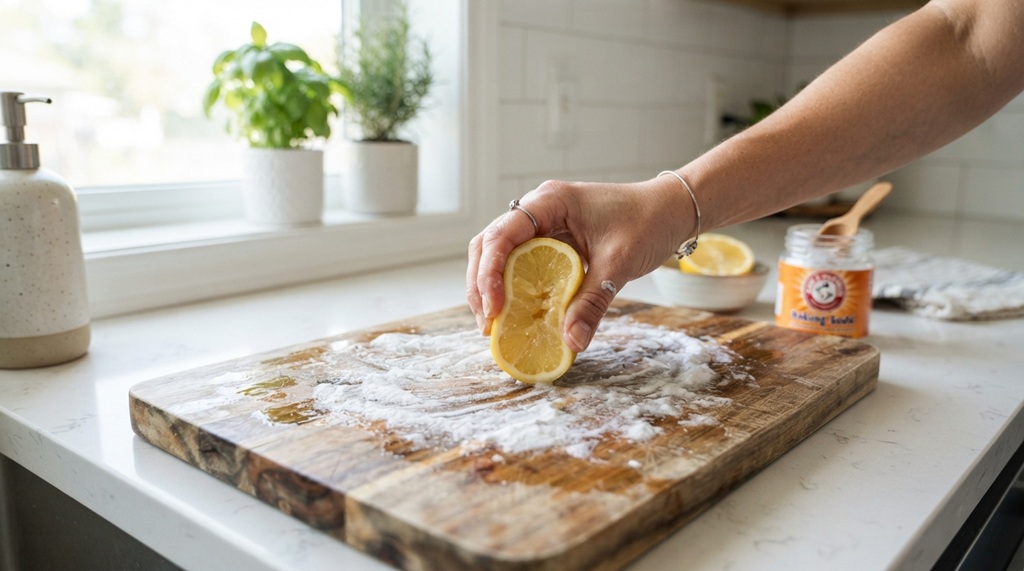
A kitchen can look spotless and still smell “off.” Damp sponges and cloths are usually the reason. They harbor bacteria faster than almost any other surface in the home. Most odor guides skip this angle, but it’s often the actual source people can’t pinpoint.
- Microwave a damp sponge for 1–2 minutes daily. Make sure it’s wet first to avoid a fire risk. This kills most of the bacteria living inside it, according to food safety researchers.
- Wash dish towels every 2–3 days, not weekly. Damp cotton left hanging is one of the fastest-growing bacterial environments in a kitchen.
- Rub a cut lemon and coarse salt onto wooden cutting boards. Let it sit for 5 minutes, then rinse. The salt lifts trapped grease out of the wood grain, and the lemon disinfects and deodorizes at the same time.
Preventing Kitchen Odors From Coming Back
Odors usually return because regular maintenance gets skipped, not because the natural remedies stopped working. Set a simple routine instead of waiting for a smell to reappear:
- Daily: microwave the sponge, take out any wet trash.
- Weekly: run the drain treatment, wash dish towels twice.
- Monthly: wash and sun-dry the trash bin, replace the fridge baking soda, deep-clean the cutting board with salt and lemon.
This routine is what makes odor removal permanent. You’re stopping bacteria from building up, instead of cleaning it up after the fact.
Frequently Asked Questions
Does baking soda actually stop working over time?
Yes. Baking soda can only absorb so many odor molecules before it’s full, even though it still looks the same. Replace it every 30 days for the best results, or sooner if your fridge tends to smell strong.
Why does my kitchen still smell after I clean the counters and floors?
Visible surfaces are rarely the real source. The smell usually comes from a damp sponge, a dirty drain, or grease on the stove hood. Check these hidden spots before assuming the smell is just in the air.
Can I use vinegar and baking soda together on all kitchen surfaces?
They’re safe for sinks, drains, and most sealed surfaces. Avoid using vinegar on natural stone counters like marble or granite, since the acid can etch the surface over time. Use a baking soda paste or a stone-safe cleaner instead.
How often should I really change my dish sponge?
Replace it every 1–2 weeks, even if you microwave it daily. The material itself breaks down and holds onto bacteria no matter how often you disinfect it. A cheap, frequent swap works better than trying to fully sanitize an old one.
Is it better to use essential oils or real citrus peels for deodorizing?
Real citrus peels work better for actively neutralizing odors, since they release oils gradually when heated. Essential oils mostly just add a scent on top of the existing smell. Save the diffuser for after you’ve treated the actual source.
Conclusion
Getting rid of kitchen odors for good means finding the real source. Check the drain, the fridge, the trash bin, and any damp sponges before you reach for an air freshener. Baking soda, vinegar, citrus, and activated charcoal all work well, but only if you keep up with them. Build the habits above into your routine, and that “why does my kitchen still smell” question tends to go away for good.
