

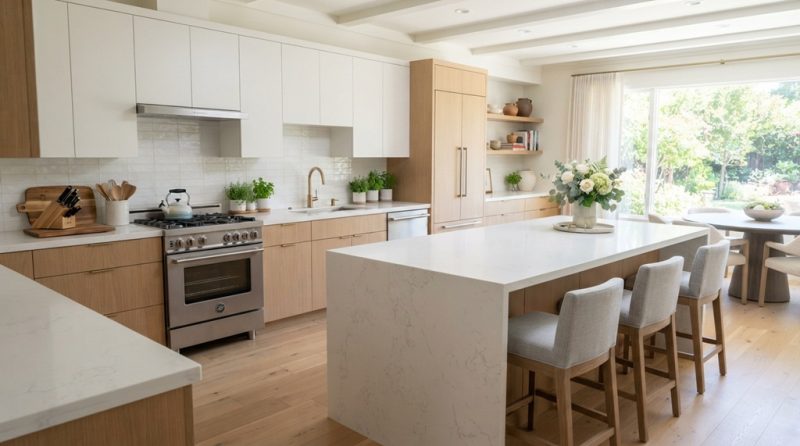
Quartz countertops need simple daily care, not heavy maintenance. Wipe up spills right away. Clean with mild soap and warm water. Avoid harsh chemicals, high heat, and sharp objects, and your counters will stay stain-free for years.
Quartz is not natural stone. It’s an engineered material made from crushed quartz crystals mixed with resin. This resin is what makes quartz non-porous. That’s great news for you. Unlike granite or marble, quartz doesn’t need sealing. But “low maintenance” doesn’t mean “no maintenance.”
Below, you’ll find exactly what keeps quartz looking new, what causes permanent damage, and how to fix stains before they set in.
Why Quartz Countertops Stain (And Why Most Stains Aren’t Actually Permanent)
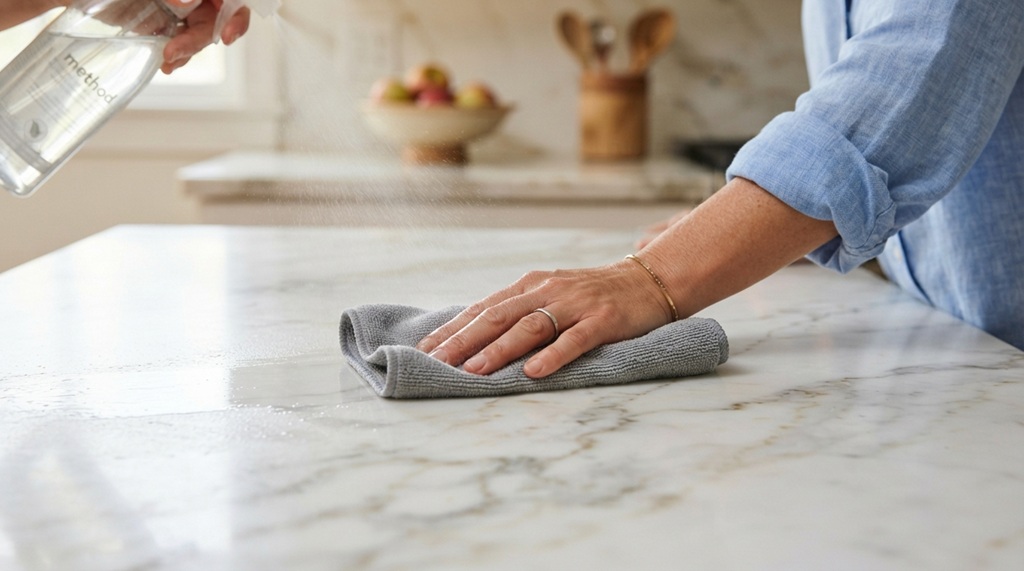
Most “stains” on quartz are surface residue, not deep damage. Because quartz is non-porous, liquids sit on top of the surface instead of soaking in. This means most spills wipe away easily if you catch them early.
Real problems happen when spills sit too long or when heat damages the resin. The resin binder in quartz can discolor or weaken under high heat or strong chemicals. This creates a mark that no amount of scrubbing removes. That’s the difference between a stain you can clean and damage that’s permanent.
The Three Real Causes of Permanent Marks
- Heat exposure – Hot pans placed directly on the surface can scorch or discolor the resin.
- Harsh chemicals – Bleach, oven cleaner, and paint strippers can break down the resin over time.
- Prolonged exposure – Oil, wine, or dye-based liquids left for hours (or days) can leave faint shadowing, even on non-porous surfaces.
Daily Cleaning Routine That Actually Prevents Stains
A simple daily habit prevents almost every quartz stain. You don’t need special products—just consistency.
Here’s the routine:
- Wipe spills immediately with a soft cloth.
- Clean the surface once a day with warm water and a few drops of mild dish soap.
- Dry the counter with a microfiber towel to avoid water spots.
- Avoid letting standing water sit near the sink edge for long periods.
This takes less than two minutes a day. Compare that to scrubbing a stubborn stain later, and it’s clearly worth it.
What NOT to Use on Quartz
Certain common cleaning products actually damage quartz over time. Avoid:
- Bleach or bleach-based cleaners
- Ammonia-based glass cleaners (used heavily)
- Vinegar or citrus-based cleaners (the acid can dull the finish)
- Abrasive powders or scouring pads
- Magic erasers (they’re mildly abrasive and can dull the shine)
Stick to pH-neutral dish soap. It’s gentle, effective, and won’t strip the surface finish.
Restoring & Protecting Quartz Surfaces From Daily Spills
While most common stains on quartz lift easily with gentle techniques and a little patience, proactively managing your prep area is the most effective way to protect your investment. Surface care goes hand in hand with smart kitchen organization; by mastering simple prep habits such as learning store fresh vegetables so they last longer you prevent decaying produce, dark organic juices, and trapped moisture from sitting on your countertops and creating stubborn, unsightly residue in the first place.
Coffee, Wine, or Tea Stains
- Mix warm water with a small amount of dish soap.
- Let the solution sit on the stain for 5–10 minutes.
- Scrub gently with a soft-bristle brush or non-abrasive sponge.
- Rinse and dry.
If the stain persists, make a paste of baking soda and water, apply it, and let it sit for 10 minutes before scrubbing.
Oil and Grease Stains
- Apply a small amount of degreasing dish soap directly to the stain.
- Let it sit for a few minutes to break down the oil.
- Wipe with a damp cloth, then dry completely.
Oil-based stains respond well to degreasers because they cut through grease without needing abrasive scrubbing.
Hard Water Spots and Mineral Buildup
- Dampen a cloth with plain water.
- Add a small amount of non-abrasive cleaner made for quartz (many brands sell one specifically).
- Wipe in circular motions.
- Dry thoroughly to prevent new spots from forming.
A tip most articles skip: hard water spots often come back because people leave a wet sponge sitting near the same spot repeatedly. Move where you rest your sponge or use a small tray it stops the cycle instead of just treating the symptom each time.
Protecting Quartz From Heat and Physical Damage
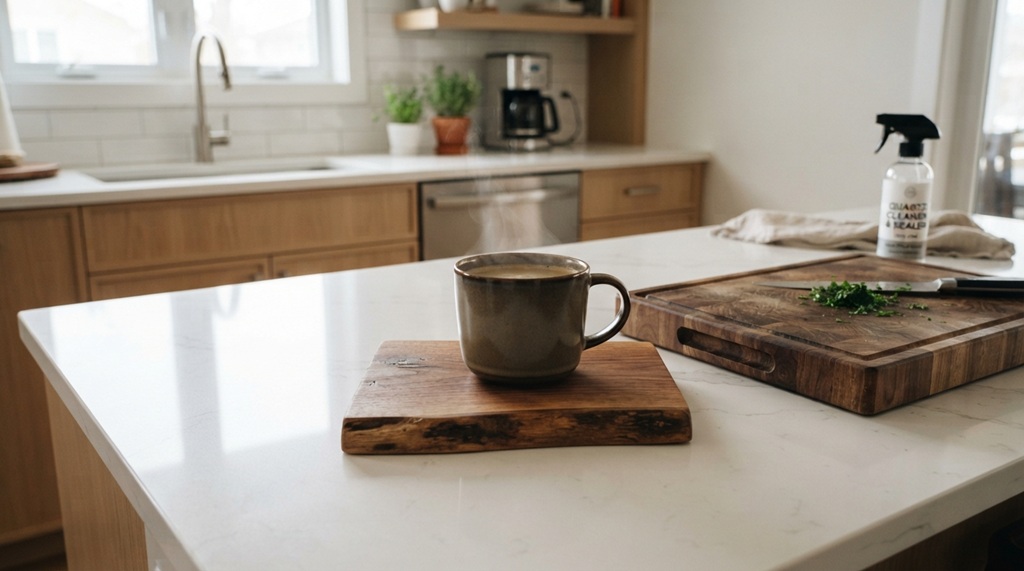
Heat is the number one cause of permanent quartz damage, and it’s completely avoidable. Quartz can typically handle brief contact with warm dishes, but direct heat from pots, pans, or slow cookers can scorch the resin.
Simple habits that prevent heat damage:
- Always use a trivet or hot pad under hot cookware.
- Never place a pan straight from the stove or oven onto the counter.
- Avoid setting slow cookers or electric skillets directly on quartz for extended periods.
For physical damage, use a cutting board every time you chop or slice. Quartz is scratch-resistant, but not scratch-proof. Knives can leave fine marks over time, especially with repeated use in the same spot.
Long-Term Maintenance Tips to Keep Quartz Looking New
A few extra habits, done consistently, keep quartz countertops looking new for decades. These go beyond daily cleaning and focus on long-term care.
- Reapply a quartz-safe shine spray every few weeks if you want extra gloss (this is optional, purely cosmetic).
- Check seams and edges periodically for any lifting or separation, especially near sinks.
- Avoid dragging heavy or rough objects across the surface, like cast iron pans or ceramic pots.
- Keep pH-testing strips or acidic products (like citrus cleaners) away from prolonged counter contact.
- Rearrange small appliances occasionally if they sit in the same spot for months—trapped moisture underneath can cause subtle discoloration over time.
That last point is one most homeowners never think about. A coffee maker or toaster sitting in the same exact spot for years can trap humidity underneath, leading to faint water spots that seem to appear “out of nowhere.”
FAQ: Quartz Countertop Maintenance
Does quartz need to be sealed like granite?
No. Quartz is non-porous because of its resin content, so it never needs sealing. This is one of the main reasons homeowners choose quartz over natural stone.
Can I use vinegar to clean quartz countertops?
It’s best to avoid vinegar on quartz. The acid can dull the surface finish over time, even though it won’t cause immediate visible damage.
Will quartz countertops stain from lemon juice?
Lemon juice can leave dull spots if it sits too long, though it rarely causes permanent staining. Wipe it up within a few minutes and rinse with water to avoid any dulling effect.
Can direct sunlight damage quartz countertops?
Yes, prolonged direct sunlight can cause quartz to fade or discolor over time, since the resin isn’t UV-stable. This is mainly a concern for outdoor kitchens or counters near large windows.
How often should I deep clean my quartz countertops?
A weekly deep clean with a quartz-safe cleaner keeps the surface looking new. Daily wipe-downs handle spills, while the weekly clean removes any residue buildup.
Final Thoughts
Quartz countertops are genuinely low-maintenance, but “low” doesn’t mean “zero.” A quick daily wipe-down, the right cleaning products, and a few smart habits around heat and cutting boards are all it takes. Follow this routine, and permanent stains become nearly impossible to create in the first place.
