
If you want more counter space in a small kitchen, the fastest wins come from clearing appliances off the counter, adding vertical storage, and rethinking what actually needs to live within arm’s reach. You don’t need a renovation to get there most of it comes down to smarter storage decisions and a few honest habit changes. This guide walks through exactly where to start and what to change first.
Small kitchens feel cramped not because they lack square footage, but because counters end up doing three jobs at once: storage, prep space, and a landing zone for everything that doesn’t have a home. Once you separate those functions, the counter itself opens up dramatically.
Below are the strategies that make the biggest difference, starting with the one most people skip.
Clear Small Appliances Off the Counter First
The single biggest counter-space killer in most small kitchens is small appliances sitting out permanently and moving even two or three of them frees up more space than any organizer you could buy.
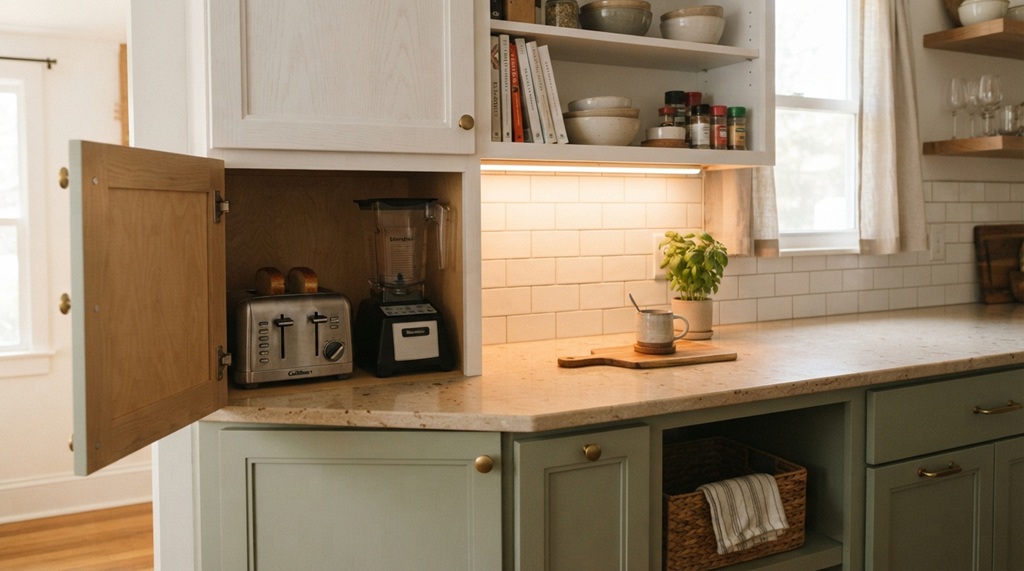
Take stock of what’s actually out: coffee maker, toaster, air fryer, stand mixer, blender. Ask which ones you use daily versus a few times a week. Daily items can stay, but weekly-or-less items belong in a cabinet, on a pull-out shelf, or in a designated “appliance garage” if you have one.
A practical trick: install a floating shelf 12–18 inches above the counter for appliances you use often but don’t want sitting on the work surface. This keeps them accessible without eating into your prep zone. For appliances used only occasionally, a lower cabinet shelf works fine the goal is getting them off the horizontal surface entirely, not necessarily keeping them in arm’s reach.
Use Vertical Space Before You Touch the Counter
If your counter is cluttered, the fix is usually above or below it, not on it vertical storage lets you hold the same amount of stuff without sacrificing any prep area.
Wall-Mounted Storage
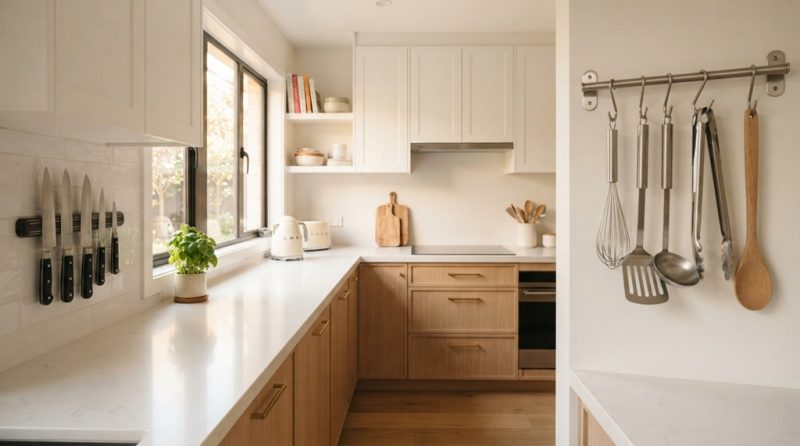
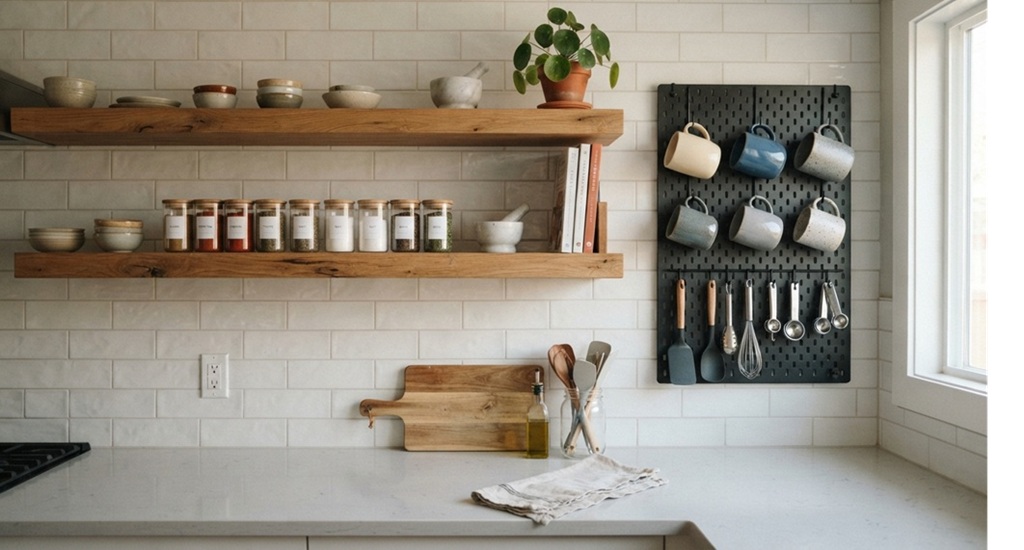
Magnetic knife strips, hanging rails for utensils, and small wall-mounted shelves for spices or oils pull items off the counter and put them at eye level instead. This works especially well near the stove, where oils, salt, and frequently used tools tend to pile up on the counter otherwise.
Under-Cabinet Solutions
Under-cabinet lighting strips are common, but under-cabinet storage is underused. Slim racks that mount to the bottom of upper cabinets can hold paper towel rolls, mugs, or a cutting board all without using a single inch of counter.
Inside-Cabinet Add-Ons
Tiered shelf inserts, stackable bins, and door-mounted racks let you store more inside cabinets you already have, which reduces the temptation to leave things out simply because the cabinet feels “full.” This is the least glamorous fix, but it’s often the most effective one, since it doesn’t require buying new furniture or hardware.
Rethink What Actually Needs to Be on the Counter
Not everything occupying your counter space deserves a permanent spot there; a quick audit often reveals that half of those items remain simply out of habit rather than daily necessity. Offloading secondary appliances instantly reclaims vital prep surface, but ensuring your core cooking zone stays pristine is what truly transforms the visual feel of a compact layout. A clutter-free countertop paired with a spotless glass range creates an uninterrupted, elevated aesthetic making it essential to follow proper techniques to clean an electric stove top safely without dulling its polished finish.
Walk through your kitchen and sort counter items into three groups:
- Daily use (coffee maker, dish soap, one cutting board) – these can stay
- Weekly use (mixer, blender, cookbook stand) – move to a cabinet or shelf with easy access
- Rarely used or decorative (fancy serving dishes, unused gadgets, mail) – relocate entirely or donate
A common mistake is keeping items out “just in case.” If something hasn’t been used in the last month, it’s very likely something that can move to storage without disrupting your routine. This single habit shift often does more for counter space than any product purchase.
Add a Rolling Cart or Slim Cabinet for Overflow
When cabinet space runs out, a narrow rolling cart or slim gap-filler cabinet can absorb overflow items without permanently taking up counter real estate.
Look for gaps next to the fridge, stove, or at the end of a counter run even a 6–10 inch gap can fit a slim rolling cart with 2–3 tiers. These are useful for pantry overflow, cutting boards, or baking supplies that don’t have a clear cabinet home. Because they’re on wheels, you can pull them out for use and tuck them away again, which keeps them from becoming permanent counter clutter themselves.
This is a genuinely underused fix: most small-kitchen advice focuses on cabinets and walls, but the floor specifically narrow, awkward gaps between appliances is often the most overlooked storage opportunity in the entire kitchen.
Use Corner and Blind Spots More Efficiently
Corner cabinets and blind spots behind appliances are some of the most wasted space in small kitchens, and fixing them indirectly frees up counter space by giving cluttered items somewhere better to go.
If your kitchen has a corner cabinet with a “dead zone” you can’t easily reach, a lazy Susan or pull-out corner organizer can make that space usable again. Items that previously sat on the counter because the corner cabinet was too awkward to dig through can move back into storage once they’re easy to grab.
Similarly, the space behind or beside a stove or fridge is often ignored. A slim vertical tray divider installed there can hold baking sheets, cutting boards, or trays that would otherwise lean against a wall or sit on the counter.
Designate Zones Instead of One Big Open Counter
Treating your entire counter as one open surface invites clutter dividing it into small, defined zones (prep, landing, coffee) keeps each area from creeping into the others.
For example, a coffee station in one corner with the coffee maker, mugs, and filters keeps that clutter contained to a foot or two of space, rather than spreading across the whole counter. A designated “landing zone” near the entry point for keys, mail, and bags prevents that pile from migrating toward your prep area, which is usually the space you actually want to protect.
This isn’t about buying dividers or trays (though those help) it’s a mental shift in how you use the space. Once each zone has a job, it becomes obvious when something doesn’t belong there, and it’s much easier to keep prep space clear day to day.
Keep Only Daily Prep Tools Within Reach
Prep tools like knives, cutting boards, and mixing bowls should be the only items competing for counter space during meal prep everything else should be one drawer or cabinet away, not on the surface itself.
A drawer organizer near the stove or prep area keeps knives, measuring cups, and spatulas close without leaving them exposed on the counter. If you don’t have drawer space, a single small utensil crock is a reasonable compromise just resist the urge to let it grow into two or three crocks over time, which is a common way counter clutter creeps back in.
Frequently Asked Questions
What’s the fastest way to get more counter space in a small kitchen?
Removing small appliances you don’t use daily is usually the fastest fix, since even one or two items take up a surprising amount of space. Pair that with a quick audit of what’s sitting on the counter out of habit rather than necessity.
Do I need to buy organizers to free up counter space?
Not necessarily many gains come from relocating items you already own into cabinets, drawers, or corners you’re not using well. Organizers like tiered shelves or drawer dividers help, but the habit of clearing the counter matters more than the products.
Where should I put small appliances if I don’t have extra cabinets?
A floating shelf above the counter or a slim rolling cart in an unused gap are both good options if cabinet space is tight. The goal is getting appliances off the horizontal work surface, even if they’re still nearby.
How do I stop my counter from getting cluttered again after organizing it?
Assign every zone of your counter a specific job prep, coffee, mail so it’s obvious when something doesn’t belong there. Doing a five-minute reset at the end of each day also prevents small piles from building back up.
Is it worth using vertical storage in a small kitchen?
Yes, walls and the space under cabinets are usually the most underused areas in a small kitchen. Adding rails, hooks, or slim shelves there can hold items that would otherwise end up on the counter.
Conclusion
Getting more counter space in a small kitchen isn’t really about buying more storage products it’s about being honest about what needs to be within reach and moving everything else out of the way. Start by clearing small appliances off the counter, then work through vertical storage, corner cabinets, and overlooked gaps like the space next to the fridge. Once you divide your counter into clear zones and keep only daily prep tools out, the space will stay clear far longer than any single organizing session could manage on its own.
