

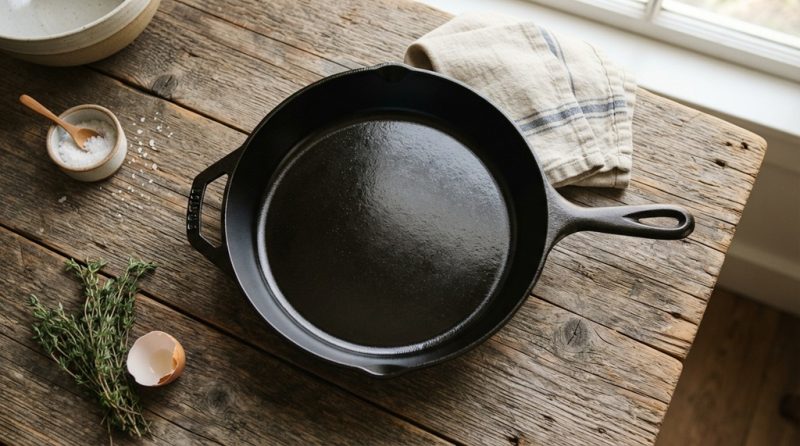
To season a cast iron pan, coat it in a thin layer of oil and bake it upside down until the oil hardens into a smooth, non-stick coating. This process is called polymerization. It fills the pan’s tiny pores and builds a tough layer that food won’t stick to.
You don’t need special tools or fancy oils. Most home cooks already have what they need in the kitchen. The real key is technique: thin oil layers, high heat, and patience.
This guide walks you through the full process step by step. You’ll also learn how to fix a sticky pan, pick the best oil, and keep your seasoning strong for years.
What Does “Seasoning” Actually Mean?
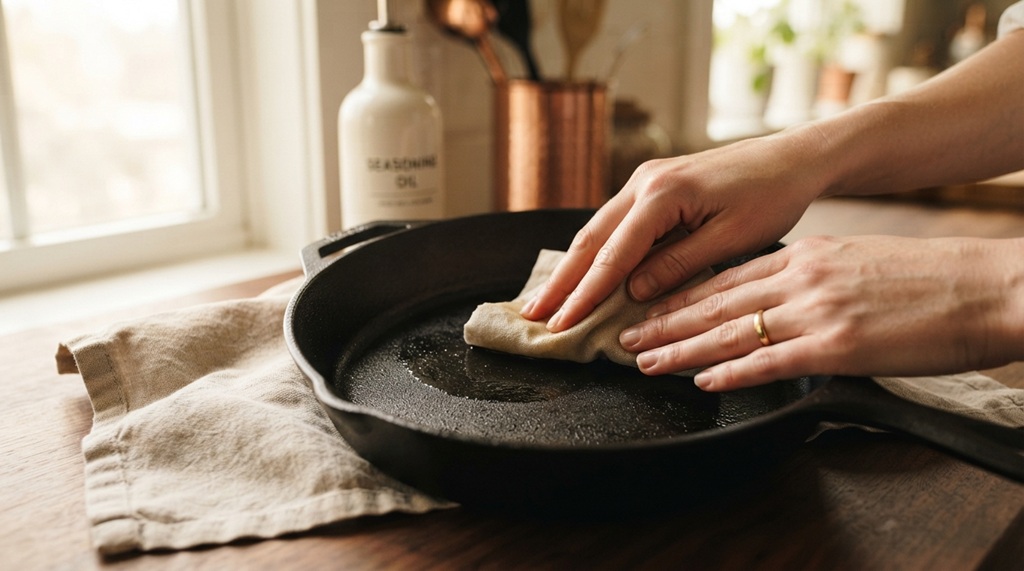
Seasoning is a thin layer of hardened oil baked onto the pan’s surface. It’s not a coating you buy. You create it yourself through heat and oil.
When oil hits high heat, it breaks down and bonds to the iron. This forms a hard, plastic-like layer called polymerized oil. Over time, layer after layer builds up. This is what gives old cast iron pans their deep black shine and slick surface.
A well-seasoned pan does two jobs. First, it stops food from sticking. Second, it protects the iron from rust. Skip seasoning, and your pan will rust fast, especially in humid kitchens.
How to Season a Cast Iron Pan Step by Step
Follow these steps in order. Each one matters for a strong, lasting finish.
Step 1: Wash the Pan Thoroughly
Start with a clean surface. Wash the pan with warm water and a small amount of dish soap. Yes, soap is fine here old advice says never use soap on cast iron, but that only applies once the pan is seasoned. A bare or stripped pan needs a real clean.
Scrub off any rust spots with steel wool or a stiff brush. Dry the pan completely with a towel, then set it on a stove burner over low heat for two minutes. This step removes leftover moisture from the metal’s pores.
Step 2: Choose the Right Oil
Pick an oil with a high smoke point. Good choices include vegetable oil, canola oil, grapeseed oil, or flaxseed oil. Avoid butter or olive oil, since both burn at lower temperatures and can leave a sticky, uneven residue.
Grapeseed oil and flaxseed oil are popular with cast iron fans. They form a hard, durable layer. Vegetable and canola oil work well too and cost less, making them a solid everyday pick.
Step 3: Apply a Thin, Even Coat
Rub a small amount of oil over the entire pan. Cover the cooking surface, the outside, and the handle. Use a paper towel or clean cloth to spread it thin.
This step trips up most beginners. Too much oil creates a sticky, gummy finish instead of a smooth one. After rubbing the oil on, wipe the pan again with a dry paper towel. It should look almost dry, with barely any oil left visible. A thin layer beats a thick one every time.
Step 4: Bake It Upside Down
Preheat your oven to 450–500°F (230–260°C). Place the pan upside down on the top oven rack. Put a sheet of foil or a baking tray on the rack below to catch any drips.
Baking it upside down stops oil from pooling in the pan’s base. Pooled oil turns sticky instead of hard and smooth. Bake for one hour.
Step 5: Let It Cool in the Oven
Turn off the oven and leave the pan inside until it cools fully. This can take one to two hours. Cooling slowly helps the oil finish bonding to the iron without cracking.
Once cool, check the surface. It should look matte black or dark brown, and it should feel smooth, not sticky. If it still feels tacky, the layer was too thick wipe on a thinner coat and repeat the bake.
How Many Times Should You Repeat the Process?
Repeat the oiling and baking process three to four times for the best results. One round of seasoning works, but it’s thin and can wear off fast with regular cooking.
Each extra round adds another layer of hardened oil. This builds up a thicker, more durable coating. Think of it like painting a wall: one coat looks patchy, but three or four coats look solid and even.
If you’re seasoning a brand-new cast iron pan or restoring a badly rusted one, plan on doing this three to four times before you start cooking with it regularly.
Common Mistakes That Ruin the Finish
Most seasoning problems come from a small number of repeat mistakes. Here’s what to watch for.
Using Too Much Oil
A thick oil layer never hardens properly. It stays sticky, gummy, or tacky, even after baking. Always wipe the pan until it looks nearly dry before baking.
Baking at Too Low a Temperature
Oil needs high heat to polymerize correctly. If your oven runs cool, the oil may not fully bond to the metal. Stick to 450–500°F (230–260°C) for the best chemical reaction.
Skipping the Cooldown Step
Pulling the pan out too soon can crack the fresh layer. Cast iron holds heat well, so rushing this step often undoes your work. Let it cool inside the oven, not on the counter.
Storing It Wet
Moisture is cast iron’s biggest enemy. Always dry your pan fully after washing, and give it a light wipe of oil before storing it. This habit alone prevents most rust problems.
Maintaining Your Cast Iron’s Seasoning After Every Use
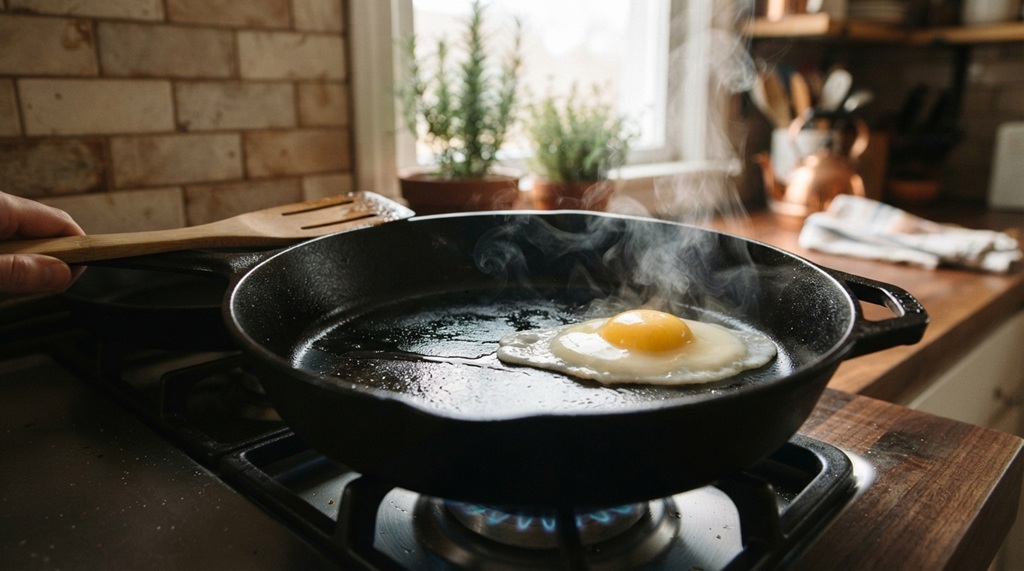
Achieving a flawless, non-stick patina isn’t a one-time endeavor; it is a long-term commitment preserved through disciplined daily care. After each culinary use, clean your skillet while it remains warm using hot water and a non-abrasive sponge. Avoid harsh detergents and steel wool, as these abrasive elements degrade the delicate polymerized oil layer you’ve built up. Immediately hand-dry the pan with a lint-free cloth and set it over medium-low stove heat for sixty seconds to evaporate residual surface moisture the ultimate defense against rust. While the iron is still warm, apply a micro-thin glaze of high-smoke-point oil using a folded paper towel to restore its protective barrier before storage. Should food occasionally stick, simply re-oil and continue cooking; the seasoning will naturally build back to a glassy perfection. Just as diligent daily care preserves your iron cookware, maintaining the surrounding surfaces in your culinary space requires the same thoughtful approach if you are upgrading your kitchen’s overall upkeep routine, maintain quartz countertops and prevent stains to keep your workspace looking immaculate.
Fixing a Cast Iron Pan That Won’t Stop Sticking
A sticky or dull pan almost always means thin or damaged seasoning, not a bad pan. The fix is simple: strip it back and start over.
Scrub off the old, patchy seasoning with steel wool and hot, soapy water. This exposes the bare iron underneath. Dry it fully, then follow the full seasoning process again oil, bake upside down, cool, and repeat three to four times.
Rust spots need the same treatment. Scrub them off completely before reseasoning, since seasoning won’t stick over rust. Once you’ve built up fresh layers, your pan should perform like new.
One insight most guides skip: cooking fatty foods, like bacon or a fried egg, in the first few uses actually helps build seasoning faster than idle oiling alone. The heat and fat during real cooking add another natural layer on top of your baked coating.
Frequently Asked Questions
Do I need to season a new cast iron pan even if it says “pre-seasoned”?
Yes, it helps. Most pre-seasoned pans have a thin factory coating that isn’t very strong. Adding two or three rounds of your own seasoning before regular use builds a tougher, more reliable surface.
Can I use olive oil to season cast iron?
It’s not the best choice. Olive oil has a lower smoke point than oils like canola or grapeseed, so it can burn and leave a sticky residue instead of a hard finish.
Why does my cast iron pan look patchy or uneven after seasoning?
This usually means the oil layer wasn’t spread evenly, or parts of the pan had leftover moisture before baking. Wipe the pan bone-dry before applying oil, and make sure every inch gets an equally thin coat.
How often should I fully reseason my pan?
Most pans only need a full reseasoning once or twice a year with normal use. Light daily oiling after cleaning handles the rest of the upkeep.
Is it safe to put a cast iron pan in the dishwasher?
No, avoid the dishwasher. The prolonged water exposure and harsh detergent strip seasoning and cause rust. Hand washing with hot water keeps the coating intact.
Conclusion
A great non-stick cast iron pan comes down to thin oil layers, high heat, and a bit of patience. Wash the pan, apply a light coat of oil, bake it upside down, and let it cool slowly. Repeat the process three to four times for a strong, lasting finish.
After that, simple daily habits quick cleaning, thorough drying, and a light oil wipe keep your pan in great shape for years. Cast iron pans can outlast almost any other cookware in your kitchen, and a solid seasoning routine is the reason why.
