
Most homeowners underestimate how much kitchen storage impacts daily cooking habits. In fact, studies show that Americans spend an average of 30 minutes per week just searching for cookware. The best way to store pots and pans not only saves time but also protects your cookware investment. A well-organized kitchen boosts cooking confidence and reduces frustration significantly. Choosing the right storage method can extend the lifespan of your pots and pans by several years.
Understanding Your Kitchen Space Before You Organize
Before diving into storage solutions, you need to assess your available kitchen space honestly. Every kitchen layout offers different opportunities, from deep base cabinets to open wall space. Knowing your storage constraints helps you choose the most practical solution. Start by measuring cabinet dimensions, wall space, and drawer depth to plan effectively.
Taking Inventory of Your Cookware Collection
First, pull out every pot, pan, lid, and accessory from your cabinets. Group them by type, such as stockpots, skillets, saucepans, and baking sheets. Identify items you use daily versus those you rarely touch. Donate or store rarely used pieces elsewhere to free up prime kitchen real estate.
Identifying High-Traffic Cooking Zones
Place your most-used pots and pans within arm’s reach of your stove. Store heavier cookware at waist level to prevent strain and accidents. Keep lids near their corresponding pots for quick access during cooking. Organizing by usage frequency dramatically reduces kitchen prep time.
The Best Way to Store Pots and Pans in Cabinets
Cabinet storage remains the most popular option for American home kitchens. Deep base cabinets offer plenty of room when you use the right organizers inside them. Stacking pots and pans without protection, however, causes scratches and damage over time. Smart cabinet organization turns a cluttered space into a functional, damage-free storage zone.
Using Pan Organizer Racks Inside Cabinets
Vertical pan organizers allow you to store cookware upright like files in a cabinet. This method gives each pan its own slot, preventing surface scratches. You can find adjustable organizer racks at most home improvement stores across the country. They work especially well for flat items like sheet pans, cutting boards, and lids.
Protecting Non-Stick and Cast Iron Surfaces
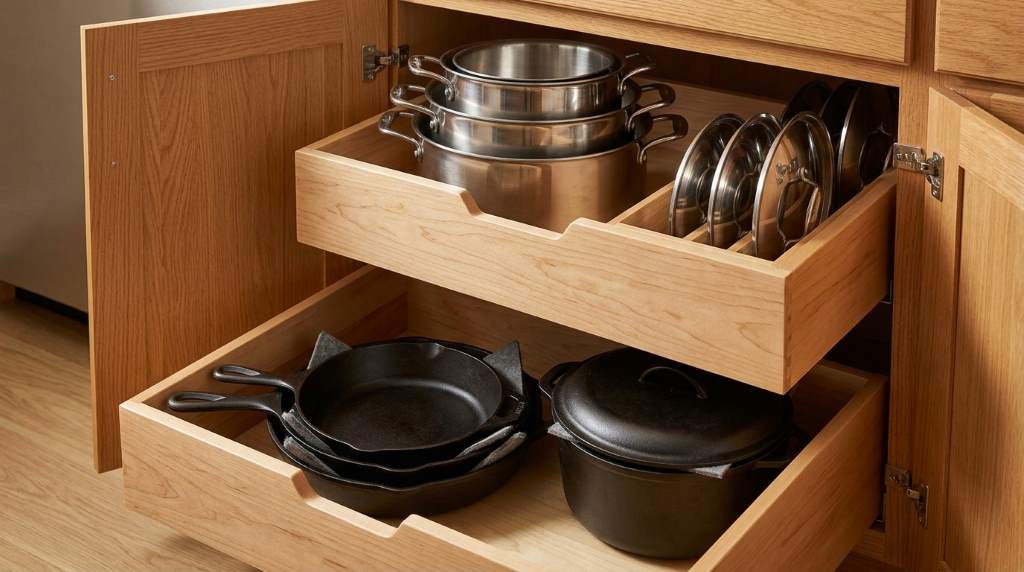
Always place a soft cloth or pan protector between stacked non-stick pans. Cast iron skillets should sit on their own shelf due to their extreme weight. Stacking heavy cast iron on top of other cookware causes warping and damage. Additionally, keeping cast iron away from moisture in the cabinet prevents rust buildup.
Hanging Pot Racks: A Stylish and Functional Storage Solution
A ceiling-mounted pot rack adds both function and visual charm to your kitchen. Hanging storage keeps pots accessible and frees up every inch of cabinet space below. Many professional chefs prefer this method because it puts cookware within constant reach. Pot racks work beautifully in kitchens with high ceilings or open layouts.
Wall-Mounted Rails and S-Hooks
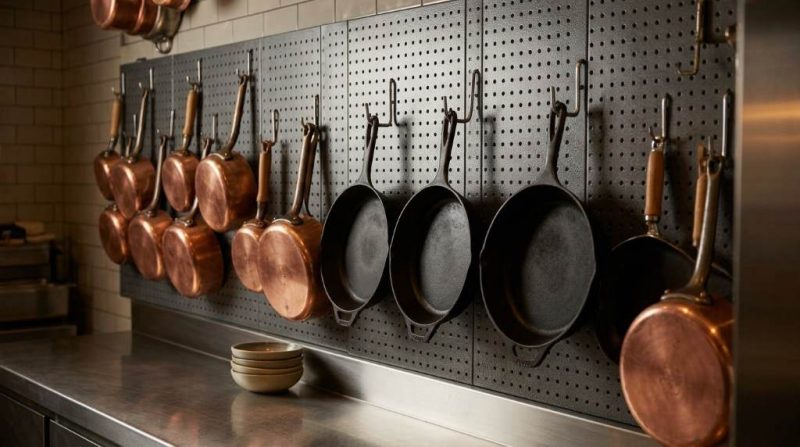
Wall-mounted rails offer a space-saving alternative to ceiling-hung pot racks. Simply screw a sturdy rail into wall studs and hang pots using S-hooks instantly. This solution works especially well in narrow kitchens with limited ceiling clearance. You can also hang lids, utensils, and small accessories on the same rail system.
Freestanding Pot Rack Options
Freestanding pot racks on wheels give you flexible, movable storage anywhere in the kitchen. They work wonderfully in rental apartments where wall drilling is not allowed. Choose a rack with multiple hooks at different heights for varied cookware sizes. Furthermore, freestanding racks often include lower shelves for storing lids and accessories below.
Drawer Storage Solutions for Lids and Smaller Pans
Deep kitchen drawers can store small to medium pans flat without taking up cabinet space. Using a drawer peg system allows you to customize compartments for different pan sizes. This approach keeps everything visible, flat, and easy to grab during cooking. Drawer storage is particularly effective for organizing pan lids in a tidy, accessible way.
Lid Storage Hacks That Actually Work
Lids are notoriously difficult to store neatly in standard kitchen cabinets. A tension rod placed vertically inside a cabinet creates instant slots for standing lids upright. Alternatively, a dedicated lid organizer rack holds multiple lids in a compact footprint. Keeping lids organized separately from pots prevents the frustrating avalanche when you open the cabinet.
Using the Oven Drawer and Pantry for Extra Storage
The storage drawer beneath your oven is perfect for flat baking sheets and roasting pans. Most people ignore this space, but it holds a surprising amount of flat cookware easily. Store rarely used pans in a pantry cabinet to free up prime kitchen space. Rotating cookware seasonally ensures that your most-used pieces always stay front and center.
Best Practices to Maintain Your Pot and Pan Storage System
The best way to store pots and pans long-term is to maintain consistency after organizing. Return every item to its designated spot immediately after washing and drying. Avoid cramming extra items into spaces that already work efficiently for you. Conducting a quick monthly review helps you catch clutter before it becomes a bigger problem.
Cleaning Before Storing Every Time
Always store pots and pans completely dry to prevent rust, mold, and odors. Moisture trapped between stacked pans damages surfaces faster than regular cooking use. Dry cast iron thoroughly and apply a thin layer of oil before storing it away. Proper cleaning habits protect your cookware and keep your storage area smelling fresh.
Conclusion
Now you have a complete roadmap for finding the best way to store pots and pans in any kitchen. Whether you choose cabinet racks, hanging rails, or drawer systems, consistency is the key. Start small by tackling one storage area at a time without overwhelming yourself. Take action today, reassess your kitchen layout, pick one solution from this guide, and transform your cooking space into an organized, efficient haven you will love using every single day.
Frequently Asked Questions
What is the best way to store pots and pans in a small kitchen?
Use vertical pan organizers inside cabinets and wall-mounted rails to maximize every inch of limited kitchen space.
Should I hang my pots and pans or store them in cabinets?
Hanging is ideal for frequently used cookware, while cabinets work better for heavier or less-used pieces.
How do I store pan lids without making a mess?
Use tension rods, dedicated lid racks, or a deep drawer with a peg organizer to keep lids upright and accessible.
Is it okay to stack non-stick pans on top of each other?
You can stack them safely if you place a soft pan protector or cloth between each pan to prevent surface scratching.
How should I store cast iron skillets to prevent rust?
Store cast iron in a dry cabinet, ensure it is completely dry before storing, and apply a light coat of oil regularly.