

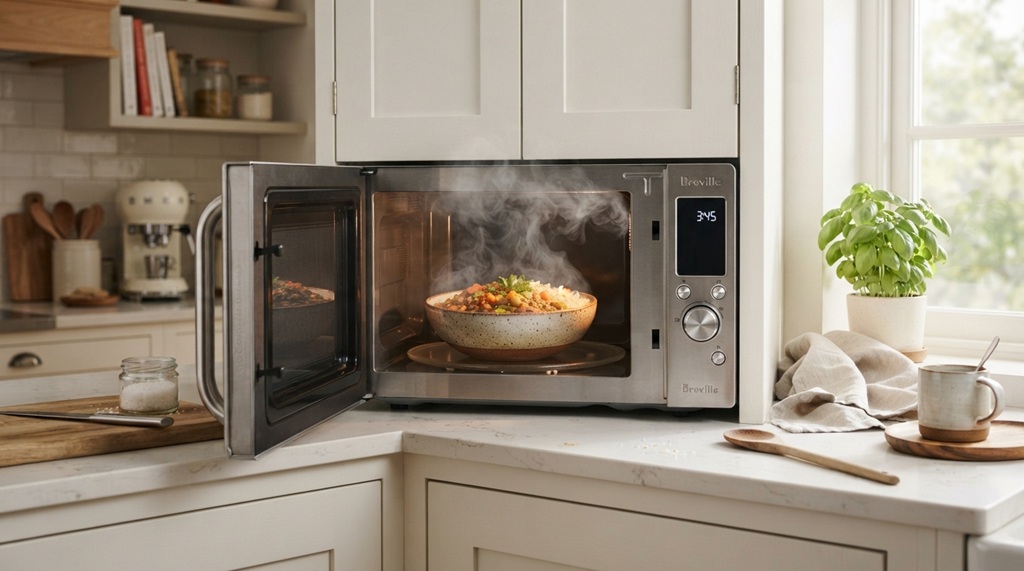
A microwave that runs but won’t heat food usually has one of a few causes. A failing magnetron, a broken door switch, a blown fuse, or a faulty diode are the most common culprits. The turntable spins. The light comes on. The timer counts down. But your food stays cold.
Read more: How to Troubleshoot a Microwave That Won’t Heat Food ProperlyThis guide walks you through each likely cause, starting with the most common. You can spot the issue and decide whether to fix it yourself or call a technician.
Most checks take five minutes or less. You won’t need special tools for the first few steps. Just grab a light bulb, a cup of water, and a bit of patience.
Start With a Simple Heat Test
Before you assume the worst, confirm the problem is real. Fill a microwave-safe cup with water. Heat it for 60 seconds on high power.
If the water comes out hot, your microwave works fine. The issue may be how you’re using it. Metal containers, an overcrowded plate, or the wrong power setting can all cause weak heating. If the water stays lukewarm or cold, you have a real heating failure. The checks below will help you find the cause.
Check the Door Switches (Interlock Switches)
Most microwaves use three interlock switches. These switches confirm the door is fully closed before the magnetron can fire. When one switch fails, the microwave often still runs. It lights up and spins the turntable. But it quietly blocks the heating function as a safety measure.
Signs of a Faulty Door Switch
The door may not click firmly when you close it. Or the microwave hums but produces no heat. Some units show no warning sign at all, which makes this problem tricky to catch.
How to Test It
Unplug the microwave first, always. Then find the switches near the door latch. You’ll usually see them after you remove the outer casing.
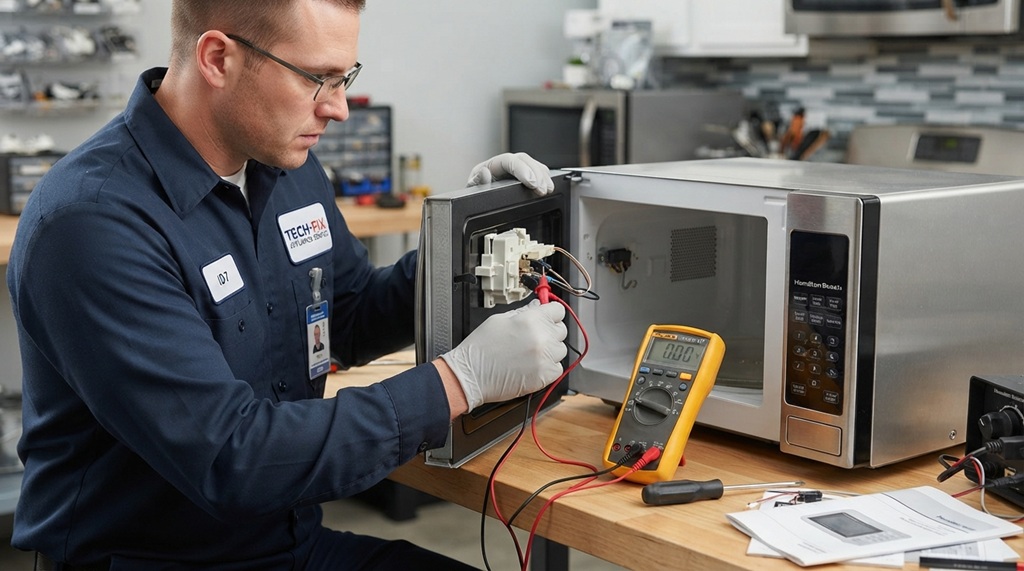
Use a multimeter to check whether each switch opens and closes as the door moves. If a switch doesn’t respond, it likely needs replacing. A licensed appliance technician can usually swap it in under an hour.
Inspect the Magnetron
The magnetron generates the microwaves that heat your food. It’s the most common failure point in older units. According to industry experts, magnetrons typically last eight to ten years under normal household use. So age is often your first clue.
Common Magnetron Failure Signs
A failing magnetron can produce a burning or metallic smell. You might also notice unusual buzzing or visible sparks inside the cavity. Often, though, there’s no obvious symptom. The microwave just stops heating.
Why You Shouldn’t Test This One Yourself
Magnetrons store high-voltage electricity even after you unplug the unit. Testing one incorrectly can cause serious injury. Leave magnetron diagnosis and replacement to a qualified technician. The repair cost often comes close to the price of a new microwave anyway.
Troubleshooting High-Voltage Diodes and Capacitors
Beyond basic latch assembly checks, heating failures often stem from internal high-voltage components specifically the diode and capacitor. The high-voltage diode converts alternating current (AC) into direct current (DC) to power the magnetron, making a blown diode one of the most frequent culprits behind an unheated meal. Operating alongside it, the capacitor stores and releases this electrical charge to sustain continuous heating performance; testing both with a multimeter safely determines whether an internal electrical replacement is required. Just as diagnosing kitchen electrical issues ensures smooth meal prep, maximizing appliance performance extends to every fixture in your home including knowing how to choose the right dishwasher settings to optimize water and energy consumption.
What Happens When the Diode Fails
You’ll typically see no heating at all. Sometimes you’ll also hear a faint buzz from inside the unit. Unlike a magnetron failure, a bad diode rarely causes smells or sparks. That makes it easy to overlook.
A Safety Note Before You Open the Case
Capacitors hold a dangerous charge long after you unplug the microwave, sometimes for days. If you’re not experienced with appliance repair, pay a professional to handle this step. It’s not worth the risk of a shock.
Look at the Thermal Fuse and Thermal Cutoff
Microwaves include one or more thermal fuses. These fuses cut power if the unit overheats, which protects the internal components. A blown fuse is a simple, cheap fix. But it can also signal a deeper problem that caused the overheating in the first place.
How to Check the Fuse
Unplug the microwave. Then find the thermal fuse near the magnetron or on the cavity wall (check your owner’s manual for the exact spot). A multimeter reading of zero resistance means the fuse works. No reading at all means it’s blown and needs replacing.
A single thermal fuse typically costs under $15 in parts. If the fuse blows again soon after you replace it, something else is likely wrong. Blocked airflow or another overheating component often causes repeat failures.
Rule Out User Error Before Calling for Repairs
Sometimes the microwave works fine, and the real issue is simpler. Overloading the microwave, using the wrong power level, or covering food too tightly can all cause uneven or weak heating. It can feel like a malfunction even when the machine is fine.
Check the vents on the back or sides. A nearby wall or object can block them and cause the unit to underperform or shut off mid-cycle. Also confirm you’re using microwave-safe cookware. Some plastics and ceramics absorb energy instead of letting it reach the food, which slows heating noticeably.
When to Repair vs. Replace Your Microwave
This choice usually comes down to cost, age, and how much you rely on the unit’s features. As a rough guideline: if your microwave is under five years old and the repair costs less than half the price of a new one, repair it.
Magnetron and control board replacements tend to cost the most. Parts and labor together can run $150 to $200. If your unit is older than eight years and already shows other signs of wear, replacement is often the smarter choice. Newer models also tend to run more efficiently.
Frequently Asked Questions
Why does my microwave run but not heat anything?
This almost always points to one failed part: the magnetron, a door interlock switch, a diode, or a blown thermal fuse. The turntable and display keep working because they run on a separate, low-voltage circuit.
Can a microwave be repaired if it stops heating?
Yes, in most cases. This is especially true when a switch, fuse, or diode causes the problem rather than the magnetron. A licensed technician can usually diagnose the exact part in a single visit.
Is it dangerous to open a microwave and check the parts myself?
Yes. Several parts, especially the capacitor and magnetron, hold a high-voltage charge even after you unplug the unit. Stick to checks that don’t require opening the case, like the water test or a look at the door and vents. Leave internal repairs to a professional.
How much does it typically cost to fix a microwave that won’t heat?
Costs vary by part. A thermal fuse might cost under $20. A magnetron replacement can run $100 to $200 or more. Get a quote first, since some repairs come close to the cost of a new microwave.
How long should a microwave typically last before parts start failing?
Most microwaves last eight to ten years with normal use, according to industry experts, though heavy daily use can shorten that lifespan. If yours is already several years old and needs a major repair, replacement often makes more financial sense.
Conclusion
A microwave that won’t heat is rarely a mystery once you work through the likely causes in order. Start with the simple water test. Check the door switches and vents next. Then move to the diode, fuse, and magnetron if the basics check out. For anything involving the high-voltage parts inside the case, call a professional. The small repair fee is worth the peace of mind.
