


The best dishwasher cycle for saving water and energy is usually the Eco or Normal cycle, not the Heavy or Quick setting. Eco cycles use lower water temperatures and longer wash times to clean dishes with less energy. Most modern dishwashers are built to make Eco the most efficient choice for everyday loads.
Read more: How to Pick the Best Dishwasher Cycle to Save Water & EnergyPicking the right cycle isn’t just about pressing a button. It also depends on how dirty your dishes are, how full your dishwasher is, and how your machine heats water. Once you understand what each cycle actually does, you can stop guessing and start saving.
This guide breaks down every common dishwasher cycle, explains when to use it, and shows you simple habits that cut water and energy use without leaving you with dirty dishes.
What Each Dishwasher Cycle Actually Does
Every cycle on your dishwasher controls three things: water temperature, wash time, and how much water gets used. Understanding these differences helps you match the cycle to the job instead of defaulting to Normal every time.
Eco Cycle
The Eco cycle uses lower temperatures and a longer wash time to clean dishes with the least energy possible. It often runs 3-4 hours, but don’t let the length fool you. Most of that time, the dishwasher isn’t actively heating water; it’s letting enzymes in the detergent break down food residue slowly at a lower temperature. This means less energy goes toward heating.
Normal Cycle
The Normal cycle balances cleaning power with moderate water and energy use. It’s designed for everyday loads with typical food residue, like plates, bowls, and cups from a regular meal. For most households, this is the go-to cycle for daily dishwashing.
Heavy or Pots & Pans Cycle
This cycle uses hotter water, longer wash times, and more water overall to blast away baked-on grease and stuck food. It’s the least efficient option, so save it for cookware and casserole dishes, not your regular dinner plates.
Quick or Express Cycle
Quick cycles use higher water pressure and hotter water in a shorter time frame to compensate for the reduced wash duration. This often means they use similar or even more energy per load than Eco, just faster. Quick wash is convenient, not necessarily efficient.
How to Choose the Right Cycle for Your Load
The right cycle depends on how soiled your dishes are, not just how much time you have. Matching cycle strength to actual dirt level is the single biggest factor in cutting unnecessary water and energy use.
For Lightly Soiled Dishes
Choose Eco or a light wash cycle. Rinsed plates, glasses, and everyday cutlery don’t need high heat or long scrub times to come clean.
For Everyday Meals
Choose Normal. It handles typical grease and food bits without wasting extra water or energy on dishes that aren’t heavily soiled.
For Pots, Pans, and Baked-On Messes
Choose Heavy, but only for that specific load. Mixing a few greasy pans with a full load of regular dishes and running Heavy every time uses far more resources than necessary.
For Skipping the Pre-Rinse
Modern dishwashers are built to handle food residue, so pre-rinsing under the tap before loading wastes water for no real benefit. Scrape plates instead of rinsing them, and let the dishwasher’s sensors and cycle do the work. According to industry experts, this single habit change can save a meaningful amount of water per load over a year.
Why the Eco Cycle Saves More Than You’d Expect
The Eco cycle looks counterintuitive at first because it takes the longest. Most people assume a shorter cycle uses less energy, but that’s backward for dishwashers. Heating water is the single biggest energy draw in a wash cycle, more than the motor, pump, or drying function combined.
Eco cycles spread the cleaning process over more time at a lower temperature, which means the heating element works less hard overall. A Quick cycle, on the other hand, needs to hit a higher temperature fast to compensate for less wash time, which demands a bigger energy spike.
This is a genuinely useful insight that gets missed in most dishwasher advice: the length of a cycle has almost no bearing on how much energy it uses. Temperature and water volume are what matter, and Eco keeps both low.
Smart Dishwasher Settings and Habits for Maximum Efficiency
While selecting the right cycle is crucial, your dishwasher’s secondary settings and everyday operating habits play an equally powerful role in controlling utility consumption. Features like heated dry, high-temp rinse, and delay start directly impact how much power and water your unit draws per load. Optimizing these settings allows you to maximize performance while minimizing environmental impact, proving that smart appliance choices extend far beyond basic cycle selection. If you are looking to streamline your meal prep with the same level of energy-conscious performance, explore where you can find reliable multicookers in Ohio to further elevate your kitchen’s overall efficiency.
Heated Dry vs. Air Dry
Heated dry uses a heating element to speed up drying, which adds extra energy use to every load. Switching to air dry or a fan-assisted dry setting, if your machine has one, cuts that energy use with only a small difference in drying time.
Half-Load or Sensor Wash Options
Some dishwashers include a half-load setting or an automatic sensor wash that adjusts water use based on how full the machine is and how dirty the water gets during the cycle. Using these options when you don’t have a full load prevents wasted water on mostly empty racks.
Delay Start for Off-Peak Energy
Delay start doesn’t reduce water use, but it lets you run your dishwasher during off-peak electricity hours if your utility offers time-of-use rates. This won’t cut your dishwasher’s resource use, but it can lower your energy bill.
Common Dishwasher Cycle Mistakes That Waste Water and Energy
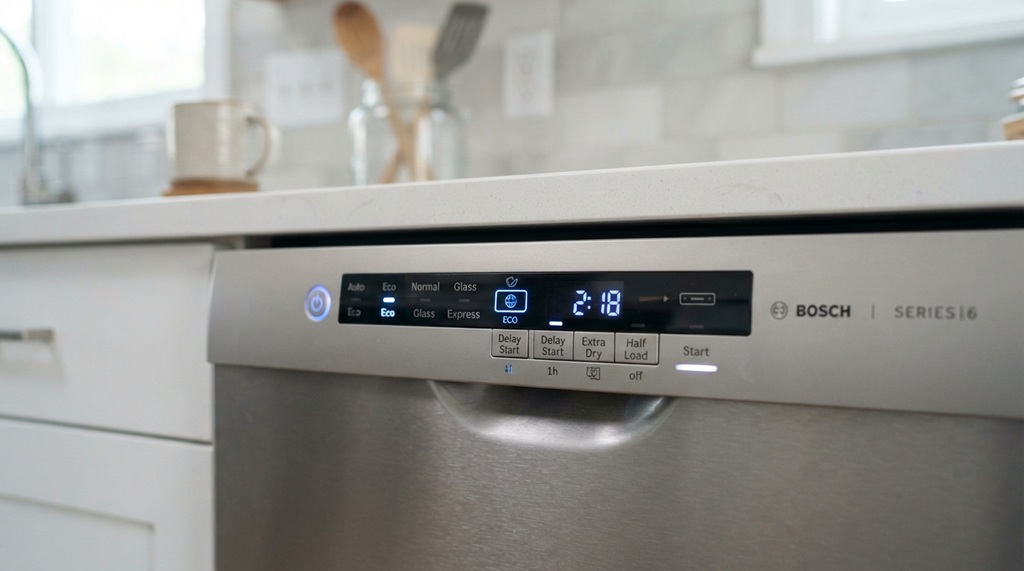
A few habits quietly cancel out any savings you’d get from picking the right cycle. Fixing these matters as much as the cycle choice itself.
Running Half-Empty Loads
Running the dishwasher before it’s full uses the same amount of water and energy as a full load, just for fewer dishes. Wait until the dishwasher is full, or use a half-load setting if your schedule doesn’t allow waiting.
Using Heavy Cycle as a Default
Some people run Heavy every time out of habit or worry that Normal won’t clean well enough. This uses more water and energy than most loads actually require. Save Heavy for dishes that genuinely need it.
Skipping Maintenance
A dishwasher with a clogged filter or spray arm has to work harder, sometimes running longer or repeating cycles automatically to compensate. Clean the filter monthly and check spray arms for blockages to keep the machine running at its intended efficiency.
Ignoring the Detergent Amount
Too much detergent can leave residue that triggers an extra rinse cycle on some machines, using more water. Follow the amount recommended on your detergent packaging, and adjust down if you notice extra residue or cloudiness.
How to Know If Your Dishwasher Cycle Choice Is Working
You’ll know your cycle choice is working when dishes come out clean without visible residue, food particles, or spotting, and your water or energy bill doesn’t show any spikes. If dishes consistently come out dirty on Eco or Normal, the issue might be load size, water hardness, or spray arm blockages rather than the cycle itself.
Try running one load on Normal instead of Heavy and inspect the results. Most people find little to no difference in cleanliness for everyday dishes, which confirms that Heavy wasn’t necessary in the first place.
Frequently Asked Questions
Does the Eco cycle really clean dishes as well as Normal?
Yes, for typical loads. Eco relies on longer wash time and enzyme activity in detergent rather than high heat, so it cleans effectively without the added energy use. It may struggle with heavily baked-on food, which is what the Heavy cycle is for.
Is it better to run a shorter dishwasher cycle to save energy?
No. Shorter cycles often use hotter water and higher pressure to compensate for less time, which can use as much or more energy than a longer, lower-temperature cycle like Eco.
Should I always pre-rinse dishes before loading the dishwasher?
No, pre-rinsing is unnecessary with most modern dishwashers. Scraping off large food scraps is enough; the dishwasher’s sensors and detergent handle the rest without wasting extra tap water.
How often should I use the Heavy or Pots & Pans cycle?
Only when you’re washing genuinely greasy or baked-on cookware. Using it as your default cycle for regular dishes wastes water and energy that a Normal or Eco cycle would use more efficiently.
Does running the dishwasher at night actually save energy?
Running at night doesn’t reduce the amount of water or energy used, but it can lower your electricity cost if your utility charges less during off-peak hours. Check your provider’s rate schedule to see if this applies to you.
Conclusion
Choosing the best dishwasher cycle comes down to matching the cycle to how dirty your dishes actually are. Eco and Normal handle most everyday loads efficiently, while Heavy should stay reserved for genuinely tough messes. Combine the right cycle with full loads, air drying, and basic maintenance, and you’ll cut water and energy use without sacrificing clean dishes.
