

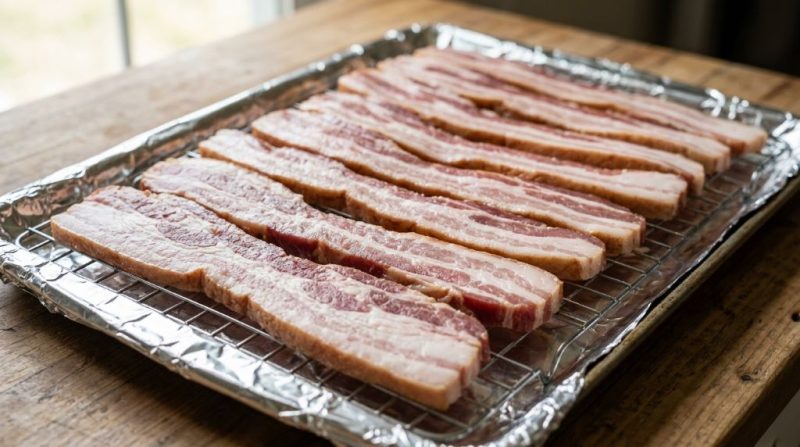
Bacon remains one of America’s favorite breakfast foods. According to industry reports, Americans consume billions of pounds of bacon every year. Many home cooks now prefer oven cooking because it creates consistent results with less mess. This method also allows you to prepare larger batches at once. If you want crispy, flavorful bacon with minimal effort, the oven offers an excellent solution.
Learning how to cook bacon in the oven can improve your breakfast routine significantly. The process requires little attention and produces evenly cooked strips. Additionally, cleanup becomes much easier when you prepare your baking tray correctly. This guide explains every step clearly and provides practical tips for perfect results.
Why Cooking Bacon in the Oven Works So Well
Oven cooking provides steady heat across every bacon strip. As a result, the bacon cooks evenly without frequent turning. Many professional kitchens also prefer this approach because it saves time and reduces splattering.
Kitchen efficiency matters when preparing multiple foods simultaneously. Understanding appliance performance, including food processor vs blender differences, can also improve your overall cooking workflow. Likewise, oven cooked bacon simplifies meal preparation and reduces active cooking time.
This method also allows excess fat to render slowly. Therefore, you achieve crispy bacon without burning the edges. Furthermore, you can cook enough bacon for an entire family in one batch.
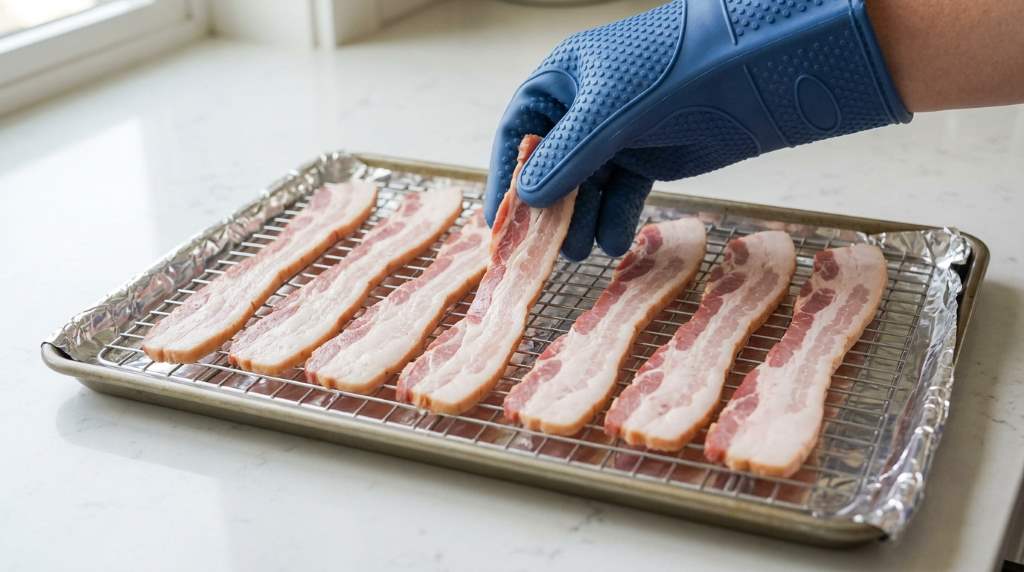
What You Need Before Cooking Bacon
Preparation remains simple because you only need a few basic items. Most households already have these kitchen essentials available. Proper equipment helps ensure consistent results every time.
Essential Equipment
- Large baking sheet
- Aluminum foil or parchment paper
- Wire rack (optional)
- Tongs
- Paper towels
- Oven mitts
Ingredients
- Regular cut bacon
- Thick cut bacon
- Optional seasonings
Using parchment paper or foil makes cleanup much easier. Additionally, a wire rack allows fat to drip away during cooking. However, baking directly on the tray still produces excellent results.
How to Prepare Bacon for Oven Cooking
Start by preheating your oven to 400°F. This temperature creates an excellent balance between crispiness and cooking speed. Meanwhile, prepare your baking sheet.
Line the baking sheet completely with aluminum foil or parchment paper. Afterwards, place a wire rack on top if desired. This setup minimizes cleanup and promotes even cooking.
Kitchen maintenance remains important after cooking tasks. For example, knowing how to clean instant pot sealing ring properly helps maintain appliance performance and food quality. Similarly, cleaning bacon trays promptly prevents grease buildup.
Arrange the bacon strips in a single layer across the tray. Avoid overlapping the slices because this prevents even cooking. Small gaps between strips allow heat to circulate effectively.
Step By Step Instructions for Cooking Bacon in the Oven
Once your bacon is arranged, place the baking sheet on the center rack. Positioning matters because it promotes balanced cooking. Then, allow the oven to do most of the work.
Understanding kitchen tools helps optimize cooking efficiency. Comparing appliances such as hand mixer vs stand mixer supports smarter kitchen decisions. Likewise, selecting the correct bacon cooking method improves results.
For Regular Cut Bacon
Cook regular bacon at 400°F for 15 to 20 minutes. Cooking time depends on thickness and desired crispiness. Begin checking after 15 minutes.
For Thick Cut Bacon
Thick bacon usually requires 18 to 25 minutes. Monitor the bacon carefully during the final minutes. Remove it once the edges become golden and crispy.
For Extra Crispy Bacon
Allow the bacon to cook two to three additional minutes. Watch closely because bacon can burn quickly near completion. Transfer immediately after achieving the desired texture.
Should You Use a Wire Rack?
A wire rack produces slightly crispier bacon because fat drains away. Consequently, the bacon remains elevated during cooking. Many professional chefs prefer this technique.
However, cooking directly on the tray also delivers excellent results. The bacon cooks in rendered fat, creating a richer flavor. Therefore, your preference determines the best approach.
Cleaning wire racks requires additional effort after cooking. Nevertheless, many home cooks believe the improved texture justifies the extra work.
Best Oven Temperature for Bacon
Most experts recommend cooking bacon at 400°F. This temperature produces excellent texture without excessive smoke. Furthermore, it works well for both regular and thick bacon.
- 350°F: Softer bacon with longer cooking time
- 375°F: Balanced cooking and moderate crispiness
- 400°F: Excellent overall results
- 425°F: Faster cooking with higher burn risk
For most American households, 400°F remains the preferred temperature. This setting consistently delivers crispy, flavorful bacon.
How to Prevent Smoke When Cooking Bacon
Excessive smoke usually occurs because bacon fat overheats. Fortunately, several techniques reduce this problem effectively. Simple preparation can prevent most issues.
- Use heavy-duty baking sheets
- Avoid overcrowding the tray
- Place a small amount of water under the foil
- Clean accumulated grease promptly
- Monitor thick cut bacon carefully
If smoke appears, reduce the temperature slightly. Additionally, verify that old grease residue does not remain inside the oven.
How to Store and Reheat Cooked Bacon
Cooked bacon stores well for several days. Proper storage preserves both texture and flavor. Therefore, meal preparation becomes easier.
Allow the bacon to cool completely before storing. Then, place it inside an airtight container. Refrigerate for up to five days.
To reheat, microwave the bacon for 15 to 20 seconds. Alternatively, warm it in the oven for several minutes. Both methods restore excellent texture.
Common Mistakes to Avoid
Several mistakes can negatively affect your bacon results. Fortunately, these issues remain easy to prevent. Awareness improves consistency significantly.
- Overlapping bacon slices
- Using incorrect oven temperatures
- Ignoring cooking progress
- Skipping tray lining
- Removing bacon too late
Careful monitoring during the final minutes remains especially important. Bacon continues cooking briefly after removal from the oven.
Creative Ways to Serve Oven Cooked Bacon
Oven cooked bacon complements numerous dishes throughout the day. Its versatility makes it a valuable ingredient. Consequently, many households prepare extra portions.
- Classic American breakfast plates
- BLT sandwiches
- Burgers
- Breakfast casseroles
- Salads
- Baked potatoes
- Pasta dishes
You can also crumble cooked bacon for soups and appetizers. This technique adds flavor and texture quickly.
Conclusion
Learning how to cook bacon in the oven provides consistent, delicious results with minimal effort. The method reduces mess, simplifies cleanup, and produces evenly cooked bacon every time. Additionally, it works well for both small and large batches.
Try this oven method during your next breakfast preparation. With a few simple steps, you can enjoy crispy, flavorful bacon while saving valuable time in the kitchen.
Frequently Asked Questions
How long does bacon take in the oven at 400°F?
Most bacon cooks in 15 to 20 minutes at 400°F.
Should bacon be flipped while cooking in the oven?
No, oven cooked bacon usually cooks evenly without flipping.
Can I cook frozen bacon in the oven?
Yes, but frozen bacon requires several additional cooking minutes.
Is parchment paper better than foil for bacon?
Both work well, although parchment often reduces sticking.
Can I save bacon grease after cooking?
Yes, strain and refrigerate bacon grease for future cooking use.