

Every year, Americans spend over $4 billion on small kitchen appliances, yet many end up buying the wrong tool for their needs. According to the NPD Group, blenders and food processors consistently rank among the top five most purchased kitchen gadgets in U.S. households. Still, most people use them interchangeably without realizing each one serves a completely different purpose. Understanding the food processor vs blender distinction helps you cook smarter, save money, and stop settling for frustrating results. This guide gives you everything you need to make a confident, informed decision.
How Each Appliance Is Actually Built
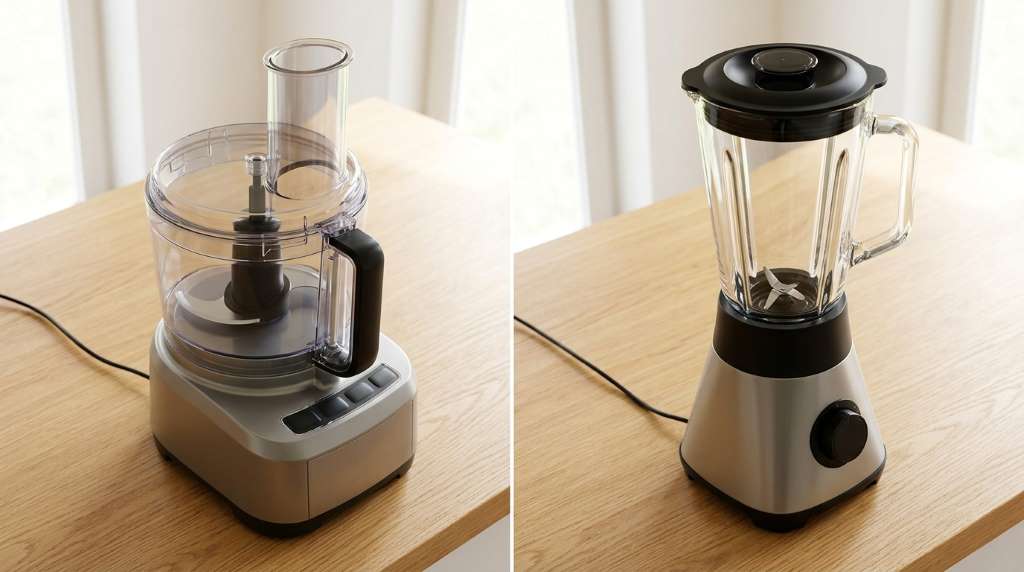
Before comparing performance, it helps to understand how these two machines are physically designed. A blender features a tall, narrow jar with a fixed blade at the base that spins at high speeds. This design pulls liquid ingredients downward and creates a powerful vortex that produces smooth, pourable results. The entire structure is built around liquid movement and fluid consistency.
A food processor, on the other hand, uses a wide, shallow bowl with a central stem that holds interchangeable blades and discs. You can swap attachments to chop, slice, shred, grate, or knead depending on what you need. The horizontal movement inside the bowl handles solid and semi-solid foods with precision. Because of this fundamental structural difference, neither appliance can fully replace the other.
Food Processor vs Blender: Core Strengths Compared
Understanding where each appliance performs best removes all the confusion around this topic. Both tools are powerful in their own lane, and trying to force one into the other’s role leads to poor results and potential damage. Below is a direct comparison of what each machine genuinely does well.
What a Blender Does Best
Blenders are specialists in anything liquid, creamy, or smooth. They produce results that no other kitchen tool can match when it comes to drinkable or pourable textures. Here are the tasks where a blender truly excels:
- Making smoothies, protein shakes, and frozen drinks
- Blending hot soups and cream-based sauces until velvety smooth
- Emulsifying salad dressings and vinaigrettes
- Preparing baby food purees from soft, cooked ingredients
- Crushing ice for cocktails, frappes, and frozen desserts
- Mixing pancake batter and thin beverage bases
High-performance models from brands like Vitamix and Blendtec even generate enough friction heat to warm cold soup during blending. Standard countertop blenders handle everyday smoothie and sauce needs without any trouble. Immersion blenders give you the added benefit of blending directly inside a pot. For liquid-based cooking, the blender is genuinely unmatched.
What a Food Processor Does Best
Food processors are built for solid food tasks that demand speed, consistency, and volume. They save enormous amounts of prep time for people who cook large meals regularly. Consider using a food processor for the following jobs:
- Chopping onions, garlic, celery, and herbs in seconds
- Shredding cheese, cabbage, carrots, and zucchini in bulk
- Slicing vegetables uniformly for salads, gratins, or casseroles
- Making pastry dough, pie crusts, and pizza dough from scratch
- Grinding nuts, seeds, chickpeas, or meat for custom recipes
- Mixing thick dips like hummus, pesto, or nut butter
The pulse function gives you precise control so ingredients do not turn into mush. Wide feed tubes on most models let you process whole fruits and vegetables without pre-cutting them. The food processor completes in two minutes what would otherwise take fifteen minutes of manual knife work. For anyone serious about efficient meal prep, it is an essential tool.
Side-by-Side Comparison Table
This quick reference table highlights the key practical differences between the two appliances at a glance.
| Feature | Food Processor | Blender |
|---|---|---|
| Primary strength | Solid foods, dough, chopping | Liquids, smoothies, purees |
| Blade type | Multiple interchangeable | Single fixed blade |
| Bowl shape | Wide and shallow | Tall and narrow |
| Requires liquid | No | Yes |
| Texture range | Chunky to finely mixed | Smooth and pourable |
| Cleaning effort | Moderate | Simple |
| Average price range | $50 to $400+ | $30 to $600+ |
This comparison makes it clear that the food processor vs blender choice depends on your cooking habits rather than any universal ranking. One is not objectively superior to the other. They simply serve different masters in the kitchen. Choose based on what you actually cook, not what sounds impressive.
Where These Two Appliances Overlap
There is a small zone of overlap where either appliance can step in, though neither delivers perfect results outside its specialty. A food processor can blend a salsa or a coarse dip, but it will not create the silky smoothness a blender produces. Similarly, a blender can roughly process soft foods like bananas or steamed sweet potatoes when liquid is added. These workarounds are functional in a pinch, but they are not ideal solutions.
Chunky salsa is one task where both machines perform reasonably well. Soft hummus also falls into a grey zone, though a blender tends to produce a creamier version than a food processor. Pesto splits opinion, with some cooks preferring the rustic chop of a food processor and others favoring the smoothness of a blender. Outside these few shared tasks, each machine has a distinct territory that the other simply cannot enter.
Which One Should You Buy First?
If you are working with a tight budget or limited counter space, choosing one appliance first is a smart and practical move. Think carefully about what you prepare most often during a typical week. Your answer to that single question will point you directly to the right purchase.
Buy a blender first if your mornings start with smoothies, you frequently make soups or sauces, or you enjoy crafting frozen cocktails. Buy a food processor first if you meal prep large batches of vegetables, bake frequently, or want to cut down on knife work in the kitchen. Neither choice is wrong because both appliances pay for themselves quickly in saved time and effort. Start with the one that solves your most frequent problem, and add the other when your budget allows.
Should You Eventually Own Both?
Many experienced home cooks consider owning both appliances a non-negotiable part of a functional kitchen. Together, they cover the full spectrum of food preparation from silky smoothies to perfectly shredded coleslaw. Some brands sell combo units that claim to perform both functions, but these hybrid machines typically compromise on performance in both categories. Dedicated appliances consistently outperform multi-purpose alternatives.
Investing in one quality appliance of each type gives you tools that last years and perform reliably every single use. A mid-range blender and a mid-range food processor together can cost less than $200 total if you shop smart. Over time, having both eliminates the frustration of trying to force the wrong tool into the wrong job. For anyone who cooks regularly, both appliances earn their place on the counter.
Practical Tips to Maximize Either Appliance
Regardless of which appliance you choose, following a few simple habits will extend its life and sharpen its performance significantly. These tips apply whether you own a blender, a food processor, or both.
- Cut ingredients into smaller, uniform pieces before loading them in
- Never overfill the bowl or jar, as this strains the motor and causes spills
- Use the pulse button on a food processor for textured, controlled results
- Add liquid gradually to a blender rather than all at once
- Clean blades immediately after use to prevent food residue from hardening
- Store blades with safety covers to protect both the blade and your hands
- Check your model’s manual for hidden features most users never discover
These small habits protect your investment and improve your results with every use. Consistent care makes an enormous difference in how long a kitchen appliance lasts. A well-maintained blender or food processor can serve you faithfully for five to ten years. Treat your tools with respect and they will never let you down.
Conclusion: Settle the Food Processor vs Blender Question for Good
The food processor vs blender debate has a clear answer once you know your own cooking style. Neither appliance is the winner in every situation, but one of them is almost certainly the winner for your kitchen right now. Blenders deliver unbeatable smooth textures for liquid-based recipes, while food processors handle solid food prep with unmatched speed and versatility. Knowing this distinction removes all the guesswork from your buying decision.
Take a moment right now to think about the three meals you cook most often each week. Then look at the strengths listed in this guide and match them to those meals. That simple exercise will tell you exactly which appliance to prioritize. Make your decision with confidence, invest in a quality model, and start experiencing the difference a purpose-built kitchen tool makes every single day.
Frequently Asked Questions
Can a food processor make smoothies like a blender?
A food processor can blend soft ingredients but cannot produce the smooth, pourable consistency that a proper blender delivers.
Is a blender good enough for chopping vegetables?
A blender can roughly chop very soft vegetables with added water, but it cannot slice, shred, or dice with the precision of a food processor.
Which appliance is better for someone who bakes regularly?
A food processor is the better choice for bakers because it handles pastry dough, pie crusts, and dry ingredient mixing far more effectively than a blender.
Can I use a blender to make hummus if I do not own a food processor?
Yes, a blender can make hummus and will actually produce a creamier texture, though you may need to scrape the sides more frequently during blending.
Which appliance is easier to clean after daily use?
A blender is easier to clean because most models allow self-cleaning with warm water and a small amount of dish soap in under sixty seconds.