
Choosing between a thermal carafe vs glass carafe is one of those decisions that feels small but genuinely shapes your daily coffee experience. According to the Specialty Coffee Association, over 70% of Americans drink coffee every day, making the right carafe a real quality-of-life choice. Studies also show that coffee kept above 175°F for more than 20 minutes loses significant flavor quality. Understanding which carafe type fits your lifestyle can save you money, frustration, and a lot of lukewarm coffee. This guide breaks down every key difference so you can decide with confidence.
What Is a Thermal Carafe?
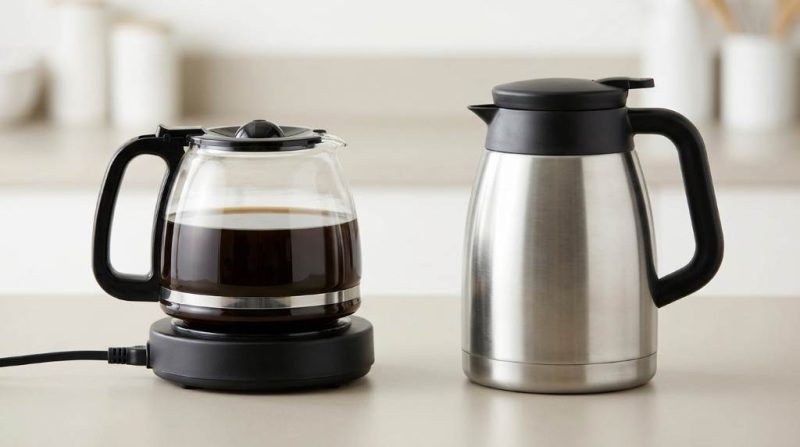
A thermal carafe is a double-walled, vacuum-insulated container designed to keep beverages hot for extended periods. The inner and outer walls trap air or a vacuum between them, significantly slowing heat loss. Most thermal carafes are made from stainless steel, though some use plastic with insulated liners. Coffee makers from brands like Technivorm, Bonavita, and Zojirushi commonly feature thermal carafes as their default vessel.
How Does a Thermal Carafe Work?
The vacuum between the walls prevents heat transfer through conduction and convection. This means the carafe does not need a heating plate to keep your coffee warm. Additionally, the sealed lid minimizes heat loss through the top opening. As a result, a well-made thermal carafe can keep coffee hot for two to four hours without any external heat source.
What Is a Glass Carafe?
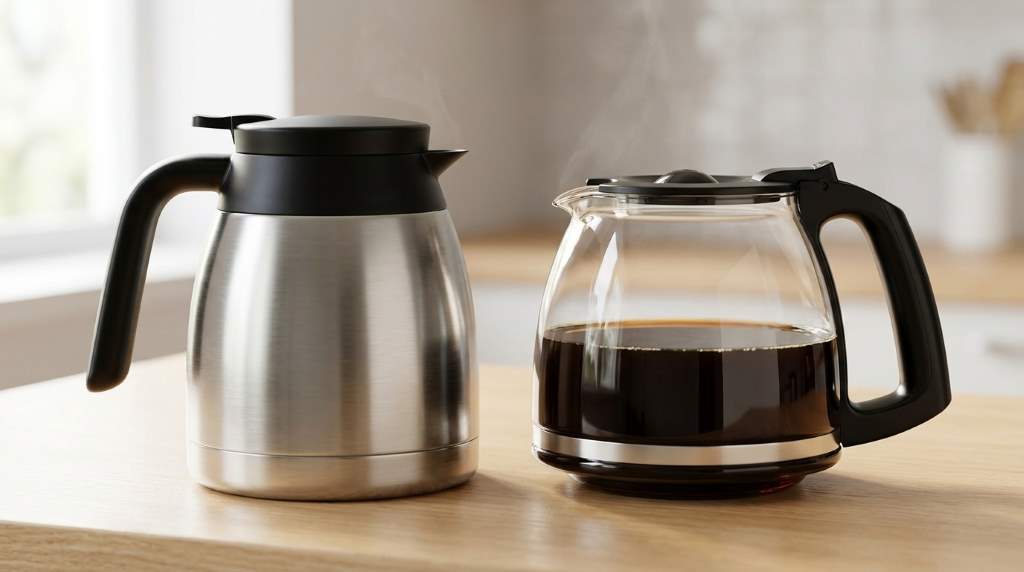
A glass carafe is a transparent, typically borosilicate glass vessel that sits on a warming plate inside a drip coffee maker. The warming plate underneath uses low electrical heat to maintain the coffee’s temperature. Glass carafes are the traditional choice found in most entry-level drip coffee makers. Brands like Mr. Coffee, Cuisinart, and Black+Decker commonly pair their machines with glass carafes.
How Does a Glass Carafe Work?
The glass carafe relies entirely on the hotplate to maintain temperature after brewing. Without the plate, coffee cools quickly due to glass being a poor insulator. The transparent design allows you to see the coffee level at a glance. However, the continuous heat from the plate actively degrades coffee flavor over time.
Thermal Carafe vs Glass Carafe: A Side-by-Side Comparison
Comparing the thermal carafe vs glass carafe across several key factors helps you make a smarter purchase. Below is a quick reference to guide your decision:
- Temperature retention: Thermal wins by a wide margin, holding heat for 2 to 4 hours
- Flavor preservation: Thermal wins because it avoids the hotplate effect that burns coffee
- Visibility: Glass wins because you can see exactly how much coffee remains
- Durability: Thermal generally wins since glass is prone to cracking and breaking
- Cleaning ease: Glass wins due to its wide, open design and dishwasher compatibility
- Price: Glass wins as glass carafe coffee makers are typically 20 to 40 dollars cheaper
- Portability: Thermal wins because it works without a power source
Which Keeps Coffee Tasting Better?
The thermal carafe wins this category without much debate. Hotplates cook the coffee continuously, causing oxidation and bitterness within 20 to 30 minutes of brewing. A thermal carafe seals in the coffee and removes the heat variable entirely. Coffee professionals and enthusiasts almost universally recommend thermal carafes for anyone who values flavor. Furthermore, the sealed environment also slows down the off-gassing process that makes coffee taste flat.
Durability and Longevity
Glass carafes are notoriously fragile and one of the most commonly replaced kitchen items. A single bump against the sink or a cold counter while hot can shatter a glass carafe instantly. Thermal carafes, on the other hand, resist drops, scratches, and temperature shocks far more effectively. Most quality stainless steel thermal carafes last five to ten years with proper care. If you have a busy household or tend to rush in the morning, the thermal option dramatically reduces replacement costs.
Cleaning and Maintenance
Glass carafes have a clear advantage when it comes to cleaning. You can easily see coffee stains and residue building up inside the transparent walls. Most glass carafes are dishwasher-safe, making daily cleaning effortless. Thermal carafes require more careful hand washing, especially around the lid mechanism and interior walls. However, a simple baking soda and warm water rinse keeps thermal carafes fresh and odor-free with minimal effort.
Cost Comparison
Budget-conscious buyers will naturally lean toward the glass carafe option. Coffee makers with glass carafes typically start around 25 to 40 dollars, while those with thermal carafes often begin at 60 to 100 dollars. Replacement glass carafes cost between 10 and 25 dollars each, but they need replacing far more often. Over a two- to three-year period, the total ownership cost between both options tends to even out. Therefore, the thermal carafe actually offers better long-term value for regular coffee drinkers.
Best Use Cases for Each Type
Understanding your daily habits helps you match the right carafe to your lifestyle.
A thermal carafe works best for:
- People who brew coffee and return to it over several hours
- Those who want consistently fresh-tasting coffee without reheating
- Households with children or pets where breakage is a real risk
- Anyone who wants the freedom to take their coffee away from the machine
A glass carafe works best for:
- People who brew and drink coffee immediately in one sitting
- Those on a tight budget who prefer lower upfront costs
- Casual coffee drinkers who prioritize simplicity and easy cleaning
- Anyone who shares a pot with multiple people quickly
Environmental Impact
Thermal carafes offer a modest environmental advantage over glass carafes in daily use. Glass carafes require the hotplate to run continuously, consuming electricity throughout the warming period. A thermal carafe uses no electricity after brewing, reducing your daily energy consumption. Over a year of daily use, this difference adds up to a measurable reduction in your kitchen’s energy footprint. For eco-conscious consumers, choosing a thermal carafe aligns with reducing household energy use.
The Final Verdict
The thermal carafe vs glass carafe debate ultimately comes down to your priorities. If you value flavor quality, durability, and energy efficiency, the thermal carafe is clearly the superior choice. If you prioritize budget, convenience, and easy cleaning, the glass carafe serves you well. Both options have a rightful place in different kitchens and different routines. Take a moment to evaluate how you actually drink your coffee each morning, and let that guide your final choice.
Frequently Asked Questions
Does a thermal carafe keep coffee hot all day?
Most quality thermal carafes keep coffee hot for two to four hours, but not all day without some temperature loss.
Is a glass carafe bad for coffee flavor?
Yes, the hotplate beneath a glass carafe continuously heats coffee and causes bitterness and oxidation over time.
Can I use a thermal carafe with any coffee maker?
Not always, since thermal carafes are designed to fit specific coffee maker models and are not universally interchangeable.
Which carafe is easier to clean?
Glass carafes are easier to clean because they are transparent, wide-mouthed, and usually dishwasher-safe.
Are thermal carafes worth the extra cost?
Yes, for regular coffee drinkers who value fresh flavor and durability, a thermal carafe is a worthwhile long-term investment.