

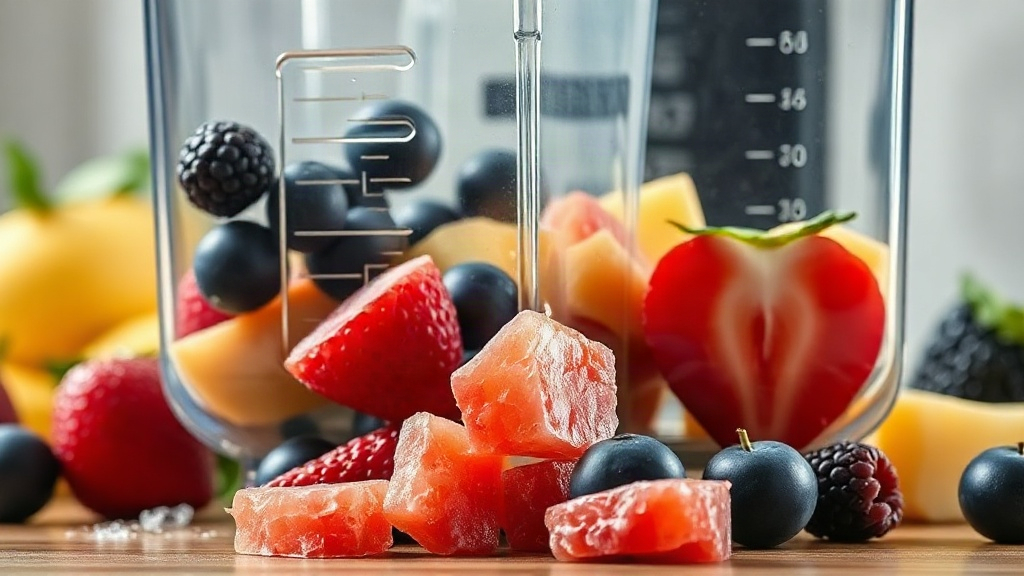
A thick smoothie with whole berries at the bottom of the cup is a frustrating way to start the morning. If your blender leaves chunks of frozen fruit at the bottom while the rest of the drink turns smooth, you are dealing with an order-of-loading problem far more often than a broken machine. The good news is that the fix usually takes seconds.
Quick answer: Load frozen fruit last, not first, and add enough liquid to cover the blades. Start on low speed to break up the ice pocket, then increase. Most bottom-chunk problems come from soft ingredients sitting on top of hard ones, which lets the blades spin without ever grabbing the frozen pieces.
This guide explains why frozen fruit settles at the bottom, how a blender’s blade and jar design affect the mix, and which loading habits deliver a smooth result every time.
What is blender leaves chunks of frozen fruit at the bottom?
The phrase describes a specific, repeatable failure in smoothie making. You add frozen fruit, liquid, and maybe yogurt or protein powder. The blender runs for a minute or more. When you pour, the liquid at the top looks creamy, but a clump of frozen fruit sits untouched at the base of the jar.
The mechanics behind the clump
Blenders create a vortex that pulls ingredients down toward the blades. Frozen fruit resists that pull in two ways. First, cold fruit is dense and heavy, so it sinks. Second, frozen pieces fuse together on contact, forming a solid block that the blade can skim over rather than cut through.
When that block parks directly over the blade assembly, the blades spin in a pocket of air or thin liquid. Without enough fluid to circulate, the fruit never gets pulled back up into the vortex. The top of the mixture may look perfectly blended while the bottom stays intact.
Why frozen fruit behaves differently from fresh
A strawberry that has been frozen contains ice crystals inside its cells. Those crystals make the fruit hard and slightly brittle. Frozen chunks also stack and interlock, while fresh fruit squashes and releases juice. That juice adds liquid, which helps circulation.
Frozen fruit also absorbs heat as it breaks down, which thickens the surrounding liquid. A smoothie can turn slushy and stiff within seconds, slowing the flow that carries pieces back to the blades.
It is not always about the machine
People often assume a weak motor is to blame. Jar shape, blade type, and how much you load all matter just as much. A tall, narrow jar pushes food down more efficiently than a wide, short one. A blunt blade on a high-powered motor can still leave a frozen pocket untouched if the mixture cannot circulate.
Many bottom-chunk complaints trace back to frozen fruit sitting at the very bottom of the jar before the liquid goes in. The blade never gets a clear path through the mixture because the hardest ingredient blocks it from the start.
Why blender leaves chunks of frozen fruit at the bottom matters
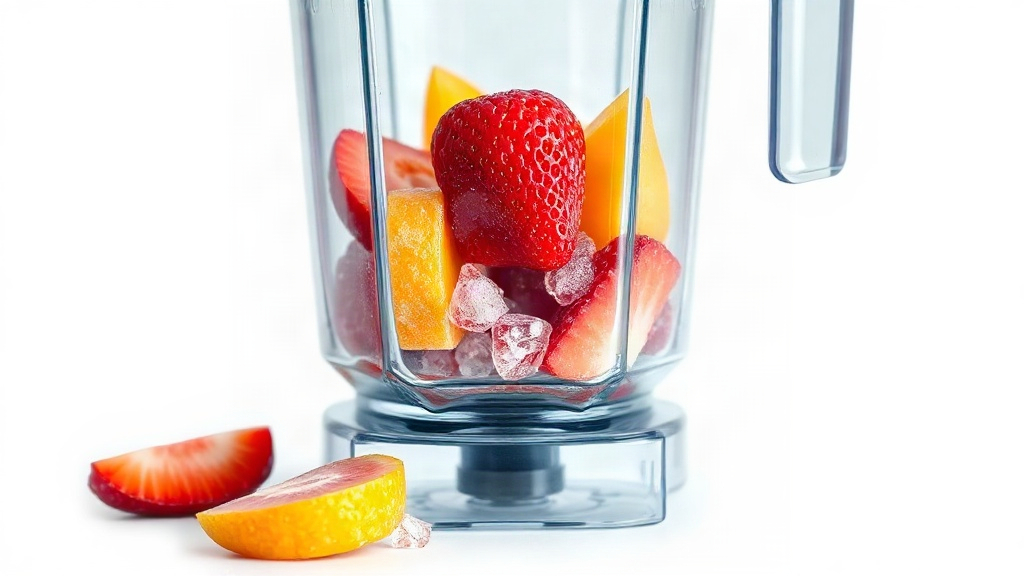
A gritty smoothie is not just a texture annoyance. Wasted ingredients add up quickly. If you toss half a cup of fruit every morning, that is roughly three and a half cups a week, or more than 14 cups a month, thrown out because it never blended.
Wasted food and wasted money
Frozen berries and mango cost real money. Repeated failed blends mean repurchasing fruit more often than your actual consumption requires. Adding liquid and re-blending helps, but it dilutes flavor and can turn a thick smoothie watery.
Strain on your equipment
Repeated attempts to blend a stuck block push the motor harder than a normal cycle. Many budget blenders run hot when the blade spins without load resistance from circulating food. Over months, that pattern can shorten the appliance’s life.
Safety and texture concerns
Reaching into a jar with a spoon while the blender is running is a serious injury risk. Some users also resort to scraping the bottom between cycles, which is tedious and easy to forget. Smooth texture matters too: unblended frozen fruit creates pockets of icy grit in an otherwise creamy drink.
It shapes how often you actually use the blender
A blender that fails every third smoothie tends to get pushed to the back of the cabinet. Solving the loading order turns a once-reliable frustration into a two-minute routine. That reliability is the difference between a healthy habit that sticks and one that fades by week three.
Best practices
A repeatable loading order solves most bottom-chunk problems before the motor even starts. Follow these steps and adjust only when your specific jar shape calls for it.
Load in the right order
- Liquid first. Pour milk, water, juice, or a dairy alternative into the empty jar.
- Soft ingredients next. Add yogurt, protein powder, nut butter, or leafy greens.
- Fresh fruit after that. Bananas and other soft produce mix easily.
- Frozen fruit last. Add frozen berries, mango, or pineapple on top of everything else.
This order keeps the blade submerged in liquid and gives frozen pieces a clear path down through softer ingredients.
Give the blend a running start
Start on the lowest speed for 10 to 15 seconds. This breaks the frozen block apart gently without straining the motor. Increase speed gradually once the fruit starts moving, and finish on high for a smooth texture.
Use a tamper or pause-and-shake technique
If your blender has a tamper, use it to push frozen fruit toward the blades while running. Without one, stop every 20 to 30 seconds, lift the jar, and shake or tap it to reset the mixture. Ten seconds of shaking can save a full minute of blending.
Match liquid to frozen volume
A common ratio is 1 cup of liquid for every 1 to 1.5 cups of frozen fruit. Thicker blends benefit from a little more liquid, especially when adding protein powder or oats. Start with slightly more liquid than you think you need, then reduce once you find your preferred thickness.
If a blend stalls, add liquid in two-tablespoon increments rather than pouring freely. Small additions restore circulation without making the smoothie thin.
Choose frozen fruit that blends easily
Smaller pieces blend faster. Frozen berries and mango chunks break down more quickly than whole frozen strawberries or large peach slices. Buying frozen fruit that is already diced reduces blend time and bottom clumping.
Common mistakes to avoid
Most stuck-fruit problems come from a small number of habits. Check your routine against these and fix them one at a time.
Adding frozen fruit first
This is the single most common cause. Frozen fruit at the bottom sits directly over the blades, and the liquid you pour on top never reaches them. The blade spins against a solid block with nothing to circulate. Always add frozen fruit last, no exceptions.
Using too little liquid
A thick smoothie is appealing, but too little liquid stops circulation entirely. If the mixture looks like wet sand rather than a moving vortex, add liquid. Ten seconds of blending on a stalled mixture tells you immediately whether you need more.
Overloading the jar
Filling above the maximum capacity line leaves no room for the vortex to form. Ingredients pack together and frozen fruit has nowhere to move. Stick to the marked limit and blend in batches if you need more volume.
Packing frozen fruit too tightly
Tamping frozen fruit down into a dense layer defeats the circulation you just built. Drop it in loosely and let the blade pull it down. A light layer blends far more easily than a compressed one.
Blending everything on high from the start
High speed slams frozen fruit against the jar walls before the blade has a chance to bite. Starting on low gives the mixture a chance to break apart gradually. Skipping this step is why some blends stall even with correct loading.
Not handling a blocked pocket quickly
If you hear the motor racing without the ingredients moving, stop. The blade is spinning in an air pocket, building heat. Pause the machine, shake the jar, and restart on low speed.
Ignoring the jar’s shape
Wide, short jars tend to push food down well. Tall, narrow jars can leave a pocket below the blade if you overfill them. If your blender struggles consistently, try loading less at once and check whether the frozen fruit reaches the blade.
Never use a spoon or spatula inside a running blender. Unplug the machine before reaching into the jar.
FAQ
Why does frozen fruit always sink to the bottom?
Frozen fruit is dense and cold, so it sinks in liquid rather than floating. Once several pieces touch, they fuse into a solid mass that blade rotation cannot easily break apart. Loading it last and adding enough liquid keeps it circulating instead of settling.
Does a more powerful blender fix this problem?
Higher wattage helps with dense ingredients, but it does not fix loading order. A strong motor still stalls against a frozen block with no liquid around it. Fix your order and ratios first, then consider upgrading if your blender struggles with normal loads.
How much liquid should I add to stop the chunks?
Start with about one cup of liquid for every one to one-and-a-half cups of frozen fruit. If the blend still stalls, add two tablespoons at a time. Overfilling with liquid makes a thin smoothie, so adjust gradually.
Can I blend frozen fruit without any liquid?
No, and you should not try. A blender needs liquid to create the vortex that carries food to the blades. Blending frozen fruit alone puts stress on the motor and leaves large chunks untouched. Add at least a quarter cup of liquid even for thick blends.
Should I thaw frozen fruit before blending?
Thawing is not required, but letting fruit sit at room temperature for five to ten minutes softens the outer layer. Fruit that is slightly softened breaks apart faster and blends more evenly than fruit straight from the freezer.
Conclusion
Chunks at the bottom almost always come from loading order, liquid levels, or a stalled vortex, not a broken machine. Add liquid first, keep soft ingredients below frozen ones, start slow, and shake the jar when the blades stop pushing food. Those four habits solve the problem for most blenders.
Check your next smoothie against the loading order in this guide. If it still clumps, increase the liquid slightly and use smaller frozen pieces before spending money on a new blender.