
Finding a dependable multicooker that fits your cooking style and budget can feel overwhelming, especially when you’re sorting through countless online listings that all look the same. Whether you’re looking to simplify weeknight dinners, batch-cook for meal prep, or finally upgrade an old slow cooker, the challenge isn’t just choosing the right model—it’s finding a retailer you can trust to deliver a genuine, high-quality product without the headache. You want a device that works reliably, comes with a solid warranty, and doesn’t leave you stranded if something goes wrong. In this guide, we’ll cut through the noise and show you the most reliable places to shop for multicookers in Ohio covering local appliance dealers, big-box stores, and online marketplaces—so you can buy with confidence and get back to cooking.
Key Takeaways
- Local appliance dealers often provide better post-purchase support and genuine warranties compared to large online-only retailers.
- Big-box stores are great for immediate pickup, but their inventory often focuses on budget models rather than premium or specialty units.
- Before buying, always verify the specific model number and voltage to ensure you are getting the exact unit you expect.
- Online marketplaces can be risky for electronics; only purchase from authorized sellers to avoid voiding your warranty.
- If you need a replacement quickly, availability in Ohio showrooms is often faster than shipping times from national warehouses.
Understanding What “Reliable” Really Means for a Multicooker
Before you start shopping, it’s important to define “reliable.” It’s not just about whether the machine can boil water or sear meat. A reliable multicooker is one that performs consistently over time, has an accessible warranty process, and is backed by a retailer who will stand behind the sale. If a device fails after three months, a low price doesn’t matter if you can’t return it or get support. When you are looking for multicookers in Ohio, you need to think about the entire ownership experience—not just the initial transaction.
The Difference Between Brand Reliability and Retailer Reliability
A top-tier brand like Instant Pot or Ninja is generally reliable, but the retailer you buy from dictates your repair and return experience. If you buy from a third-party seller on a massive online marketplace, you may have difficulty processing warranty claims if that seller is no longer active. Conversely, established local dealers often have direct lines to manufacturers and will handle service requests on your behalf. Therefore, the “reliability” you’re looking for is a combination of the product’s engineering and the store’s customer service.
Option 1: Local Ohio Appliance Dealers (The Quality Choice)
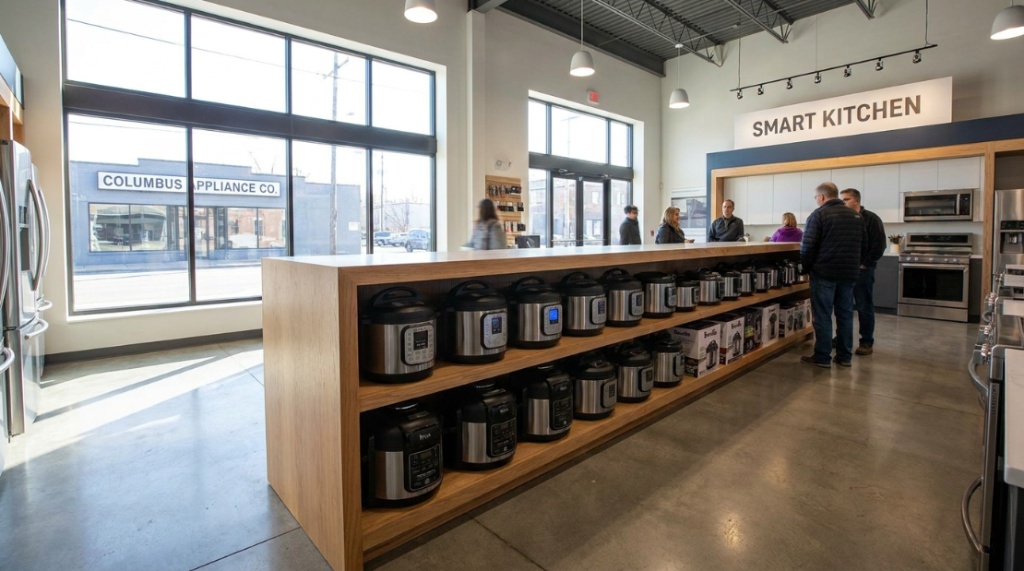
For many residents, the best kept secret in the state is the network of independent appliance dealers. Unlike national chains, these stores rely on repeat business and local reputation. They cannot afford to sell you a dud because their name is attached to the sale. Shopping here gives you the advantage of talking to a knowledgeable human who actually understands the difference between a pressure cooker and an air fryer lid.
When you visit a local dealer, you can physically inspect the unit. You can check the weight of the pot, test the lid seal, and see if the buttons feel flimsy. This tactile inspection is critical if you plan to use the multicooker heavily. Additionally, many local dealers offer white-glove delivery or in-store pickup, meaning you don’t have to worry about a courier throwing a fragile pressure cooker onto your porch. If you are looking for specific models at fair prices, these showrooms often stock multicookers in Ohio that big-box stores overlook, such as the larger 8-quart models or professional-grade units.,Before upgrading your kitchen gadgets, learn the best preservation techniques by checking out our guide on how to maintain quartz countertops and prevent stains.
Why Showroom Support Matters
Consider this scenario: your display screen malfunctions. If you bought it from a local dealer, you can call them and drop the unit off at the store. They handle the shipping to the manufacturer or fix it on-site. If you bought it from a warehouse club that closed, you are left dealing with a call center and a prepaid shipping label that might require you to pack a heavy cooker yourself. The time saved by using a local shop is often worth the few extra dollars you might pay.
Option 2: Big-Box Retailers (For Immediate Needs)
Stores like Target, Walmart, and Best Buy offer the undeniable advantage of instant gratification. You can walk out with a multicooker today, skipping the shipping wait entirely. These stores are excellent if you are purchasing a generic house brand or a basic 6-quart duo model for everyday cooking. Their return policies are generally lenient, usually allowing returns within 30 to 90 days with a receipt.
However, there is a significant trade-off regarding selection and durability. Big-box stores often stock “exclusive” models that are built to a lower price point. These models might have thinner stainless steel inner pots or cheaper plastic housing. While they are reliable enough for light use, they may not stand up to daily searing or high-pressure cooking. If you are a serious home cook, you will likely find the inventory at big-box stores to be limited to entry-level specifications.
Checking the “White Box” Warning
Be cautious of units returned by other customers that are repackaged and put back on the shelf. Before purchasing from a big-box retailer in Ohio, check the box for excessive tape or damage. Ensure all accessories (measuring cups, steam rack, and power cord) are present before you leave the parking lot. It sounds basic, but it is a common pitfall that can ruin the excitement of a new purchase.
The Critical Role of Authorized Online Retailers
There is no denying the convenience of ordering from the couch. When shopping online, your goal must be to ensure the seller is an “Authorized Reseller.” Companies like Instant Pot and Breville have strict policies: they will void warranties if the product is sold through an unauthorized channel. If you buy a new unit from a random marketplace seller at a 50% discount, there is a high chance the serial number is not registered with the manufacturer, leaving you with zero recourse if the heating element fails.
When researching specific multicookers in Ohio via the web, stick to the brand’s official website storefronts or verified appliance retailers. These sites usually list the warranty terms explicitly and provide customer service numbers that are actually staffed. While you might miss the tactile experience of holding the product, you gain access to a wider range of colors and capacities that physical stores rarely shelve.
Evaluating Key Features Before You Buy
Reliability is also about whether the machine suits your actual routine. A robust motor and hefty inner pot mean nothing if the user interface is too complex for your family to use. Let’s break down the specific features you should prioritize to ensure you buy a product that won’t end up collecting dust in a cabinet.
Inner Pot Thickness and Weight
This is the most overlooked factor. The inner pot is the workhorse of the multicooker. Cheaper pots are prone to warping. When they deform, they lose contact with the heating base, resulting in uneven cooking and “burn” notices. Look for pots with a visible aluminum or copper layer encapsulated in the base, or a thick 3-ply stainless steel construction. A heavy pot is a sign of a high-quality heating core.
Sealing Ring and Lid Construction
For pressure-cooking reliability, the silicone sealing ring must snap into place firmly. If the ring is flimsy, the pot will leak steam, leading to longer cooking times and dry food. Check the hinge mechanism on the lid—this is the most common structural weakness on budget models. A sturdy, metal hinge will last years, whereas plastic hinges degrade with heat exposure.
Why Physical Presence Still Matters for High-Ticket Electronics
In a state as spread out as Ohio, driving 40 minutes to a showroom might seem like a waste of time when you could order online while waiting for coffee. However, for a device as safety-critical as a pressure cooker, the physical presence truly matters. We are not talking about a flimsy toaster; we are talking about a machine that operates at high pressure and can cause severe burns if the safety mechanisms fail. Buying from a source that prioritizes safety compliance is essential.
Local dealers and reputable authorized online retailers stick to the exact safety standards set by UL or ETL. Unauthorized third-party sellers often import “grey market” units that are manufactured to different voltage or safety standards for overseas markets. These units might work, but their safety certifications may not be valid in the US. Always verify the authentication sticker on the device itself or request certification numbers from the seller before handing over your credit card.
Comparing Your Purchasing Options in Ohio
| Purchasing Channel | Pros | Cons | Best For |
|---|---|---|---|
| Local Appliance Dealers | Expert advice, trade-in options, immediate replacement, and warranty service hand-holding. | Limited stock of “trendy” niche models; slightly higher price tags. | Serious home cooks; those needing replacement parts quickly. |
| Big-Box Retailers | Lowest price point for basics; generous return windows; instant pickup. | Lower-tier “exclusive” models; limited knowledge of staff; risk of repackaged returns. | Budget shoppers; those replacing a broken unit today. |
| Online Marketplaces | Massive selection; price comparison ease; customer reviews available instantly. | Warranty voids, grey market items; shipping damage risks. | Shoppers who know the exact model number they want. |
Common Mistakes to Avoid When Buying a Multicooker
Finally, you can improve your chances of success simply by avoiding the most common shopping errors. First, do not buy a “new version” just because it has a digital screen—often, the manual dial models are more durable and easier to repair. Second, ignore the “recipe” volume of a unit; if you have a family of two, cooking tiny amounts in a large pressure cooker is difficult because you need a minimum liquid level.
Third, and most importantly, do not throw away the packaging until the 30-day mark has passed. If you get a lemon, you will want the original box to make a return smooth. Finally, always check the amp draw. Most multicookers need a dedicated 15-amp circuit. If your kitchen is old and has weak wiring, you might trip breakers constantly, which leads you to blame the cooker when the issue is your home’s electrical infrastructure.
Frequently Asked Questions
Is it safe to buy an open-box multicooker from a big-box store?
It can be risky. An open-box item might lack crucial accessories like the sealing ring or the steam release handle, which are unsafe to operate without. If you buy an open-box item, ask an employee to verify that all safety components (especially the lid and gasket) are present and that the unit shows no signs of dropping or damage.
Do I need a special outlet for a multicooker?
Most standard multicookers use a standard 120V outlet. However, you should plug them directly into the wall outlet rather than a power strip or extension cord. The high wattage drawn when heating can overload a cheap extension cord, creating a fire hazard.
How long should a good multicooker last?
With proper care and regular cleaning of the gasket and valve, a reliable multicooker should last between 5 and 7 years with heavy usage. If you use yours daily, you might see performance declines sooner, mostly related to the non-stick coating if you have a non-stick pot.
Can I buy just a replacement inner pot?
Yes, most manufacturers sell inner pots separately. Before buying, check if the store has to order it or if it is in stock locally. It is recommended to buy a second pot anyway—one for sweet dishes and one for savory meals—to prevent flavor transfer.
Are expensive models really more reliable than cheap ones?
Not always. The price often correlates with the number of features and presets, not build quality. A basic, high-end 6-quart unit with physical buttons is often more reliable than a budget machine with a complex touchscreen. Focus on the materials used in the pressure cavity rather than the number of “smart” functions.
Conclusion
Finding the right multicooker is about aligning your budget with the durability you need. While online deals are attractive, your best bet for true reliability—meaning safety, durability, and manufacturer support—is to purchase through a knowledgeable local appliance dealer in Ohio who understands the product line. They can offer warranties that protect you for years, which ultimately provides better return on investment than chasing bargain bins at national chains. Remember to inspect the physical quality of the unit, avoid grey-market imports at all costs, and ensure you have a proper outlet to plug it into. Take your time, ask questions, and your new multifunction cooker will quickly become the most used appliance in your kitchen.
